
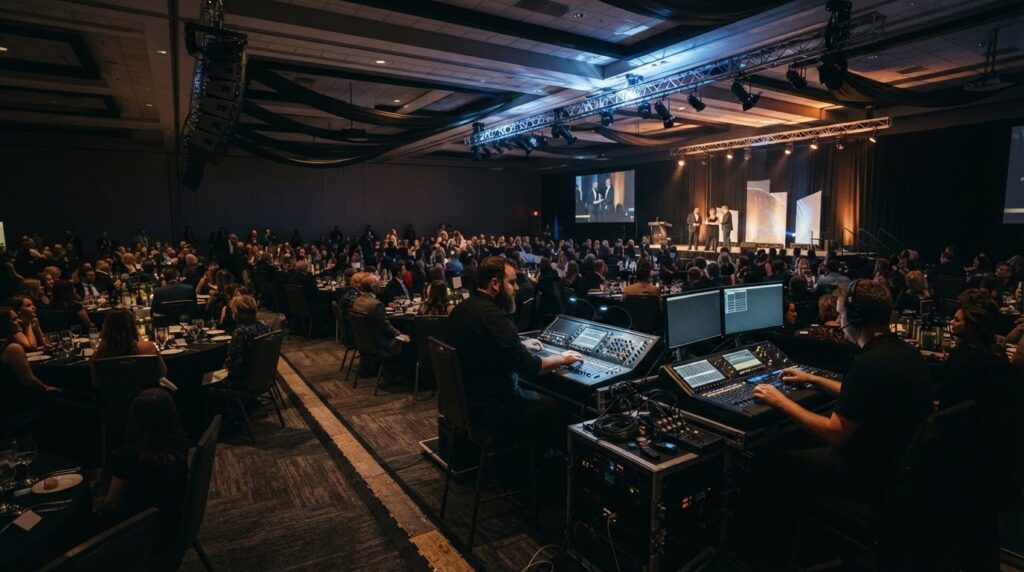
When microphones cut out, slides fail to appear, or lighting misses its cue, the cause may be equipment setup or operation. Event AV technicians prepare and configure sound, lighting, video, and staging, then monitor the systems and respond to issues during the program.
Their work also includes testing connections, managing cables, checking equipment condition, and packing down afterward. This article explains how those responsibilities support corporate and social events, from preparation and troubleshooting to equipment maintenance.
Key Takeaways
- Match the production approach to the event format, room, and audience so technical decisions support the experience you need.
- Understand how audio, video, and lighting responsibilities are coordinated to keep presentations and cues on track.
- Learn how routine equipment checks and a clear troubleshooting process can limit disruptions during live events.
- For live or hybrid production, Straight Street Event Services provides audiovisual production with all-in, transparent pricing and the Comfort Warranty.
Troubleshooting and equipment maintenance
A fault can interrupt a presentation, make speech hard to hear, or leave a screen blank. A technician traces the signal path, checks connections, settings, and power, then decides whether equipment needs adjustment or replacement. Quick diagnosis helps keep attention on the speaker rather than the disruption.
Typical setups include microphones, speakers, mixers, projectors, screens, video switchers, stage lighting, stands, and cables. Placement matters: a poorly aimed speaker can make speech unclear, while lighting directed at the wrong area can leave a presenter hard to see.
When a problem occurs, the operator identifies what changed, isolates the affected connection, and tests the signal again. A spare cable or microphone can help distinguish a faulty component from a routing issue. During live entertainment, monitoring sound and lighting cues helps the crew respond without drawing attention from the audience.
Equipment care continues after the event. Technicians inspect for wear, service equipment, check battery health, and track firmware updates. These checks can reveal a damaged cable or unreliable battery before the next setup.
In Canada, insurance, safety, and electrical arrangements depend on the venue, contract, and scope of work. Planning should account for venue procedures, cable routes, equipment placement, and power needs before setup begins.
There is no fixed technician count based only on audience size. Staffing depends on the equipment, event format, cue complexity, and whether audio, video, and lighting need separate operators.
A rental package may suit a simple corporate meeting with few cues and someone confident operating the equipment. Complex presentations, multiple microphones, or live video need careful setup and active troubleshooting. The equipment list alone does not cover that work.
AV for corporate and social events
Corporate events depend on clear presentations and transitions that keep to the schedule. The production plan should reflect the agenda, speaker movement, and room layout. For example, a lavalier microphone lets a presenter move while speaking, while an operator monitors sound levels for the room.
Video choices depend on the content and audience. A projector and screen can display slides or video, while camera placement matters when remote speakers join. For a conference with several sessions, cue notes help operators prepare the right presentation before each speaker begins.
Social events call for a different balance. At a gala, lighting can keep speeches visible, then shift attention to entertainment. Audio levels should support the program without overpowering conversation at tables. The schedule helps the crew time each change.
Hybrid events add remote participants to the production plan. The crew needs to consider both the room and the stream so remote guests can follow speakers and presentations. Clear communication between presenters and operators also makes changes easier to manage during the program.
Start with the event format, agenda, and audience needs. These shape production choices and operator responsibilities. If you’re considering coordinated production support for a live event, discuss the program alongside the equipment list.
For corporate events and conferences, audio technicians manage microphone assignments, lavalier placement, sound levels, and communication systems. Video technicians use encoders, video switchers, and network connections to send event feeds to streaming platforms, webcasts, or overflow rooms.
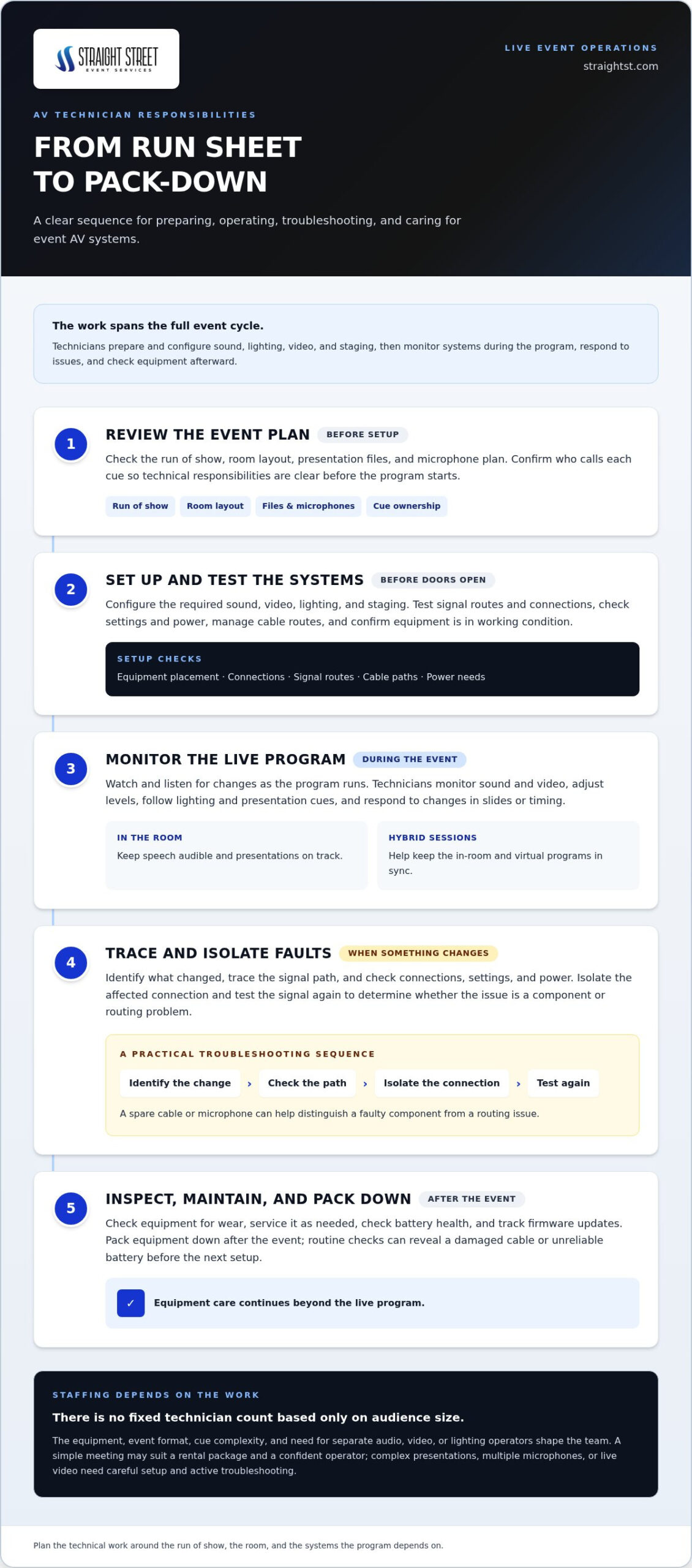
AV technician responsibilities before and during events
Before a conference, technicians review the run of show, room layout, presentation files, and microphone plan. They set up equipment, test signal routes, and confirm who calls each cue. During the program, they monitor sound and video, adjust levels, and respond to changes in slides or timing. For a hybrid session, they also help keep the in-room and virtual programs in sync.
An individual technician operates or supports assigned systems, such as microphones, sound, video, or lighting. An AV company supplies and coordinates production resources, while an event production team may also oversee broader show operations. At a conference, technicians handle the equipment while the production team keeps technical cues aligned with the schedule.
In Canada, an AV technician’s earnings depend on province, experience, employment arrangement, and specialization. Employees and freelance operators may be paid differently, and the role’s audio, video, or lighting responsibilities can also affect earnings.
The cost of hiring a technician depends on the scope of work, not one universal hourly or daily rate. Labour covers setup, event operation, and teardown; the role, schedule, and production requirements also shape the estimate. A short presentation with basic audio needs differs from a conference with video cues and hybrid delivery.
Share the agenda, venue details, presentation format, and cue requirements early. That gives the production team a clear basis for assigning technical responsibilities and preparing equipment. For support coordinating audiovisual production for your live event, start with the event’s format and operational needs.
Straight Street Event Services: Live Event Audio visual Production Services
Straight Street Event Services provides live event production for organizations that need coordinated technical support, not just equipment. The team brings sound, lighting, staging, video, and technical direction together to support the event’s purpose.
For a conference or corporate event, production can be coordinated with the schedule, presenters, and audience. Hybrid event production supports both in-room and remote attendees. Audio and video can also be provided as individual parts of the technical setup.
Share your event format and production needs with Straight Street Event Services to discuss your next step.
Set the Right Direction for Your Event
Start planning with the decisions that shape the audience experience: what people need to hear, see, and follow, and how the program will move. Event AV technicians can deliver that plan effectively when the technical scope and event goals are clear from the outset.
Straight Street Event Services offers live event production, hybrid event production, and audio production. Its written Comfort Warranty and all-in pricing clarify the service commitment and costs.
Before reaching out, gather your event format, draft schedule, presentation needs, and any virtual audience requirements. Those details give the production discussion a practical starting point. To discuss audiovisual support for your event, contact Straight Street Event Services. A clear brief is a sound first step toward a confident plan.
Frequently Asked Questions
What Does an AV Technician Do?
An AV technician makes an event’s technical systems work together. Depending on the role, they may mix audio, switch video, operate lighting, or route signals. For example, a front-of-house audio engineer listens from the audience area and adjusts sound levels. Their work turns the production plan into clear sound and visuals during the program.
What do event AV technicians do?
Event AV technicians operate and monitor the systems assigned to them, responding to cues and changes during the program. Roles can be specialized: an A1 audio engineer oversees the sound system, while a V1 video engineer manages video switching and displays. At a conference, these operators coordinate their work so presentations and speaker changes reach the audience correctly.
What skills and certifications do event AV technicians need in Canada?
Useful skills include understanding how signals move through a system, operating audio or video equipment, solving technical problems, and communicating clearly with presenters and crew. AVIXA offers the CTS certification for AV professionals. CTS-I relates to installation, while CTS-D relates to design. These credentials describe different areas of expertise, not one qualification for every event role.
Where can I find and hire event AV technicians in Canada?
Straight Street Event Services provides on-site audiovisual technicians as part of its event production work. The team serves Cambridge, Kitchener, Waterloo, Toronto, Sarnia, Windsor, Mississauga, Hamilton, London, Stratford, Southern Ontario, St. Catherines, Niagara Falls, and Guelph. For a live or hybrid event in these communities, contact Straight Street to discuss your production needs.
What should I ask before hiring an event AV technician?
Clarify who will operate each system, what the crew will cover, and how technical changes will be handled during the show. Ask how the quote covers equipment, labour, and transportation, and whether venue charges such as power or rigging are identified. Straight Street provides an all-in quote covering equipment, labour, and transportation, along with experienced operators for assigned positions, so responsibilities are clear before event day.