
Beyond the Bulb: Understanding Professional Event Lighting Production
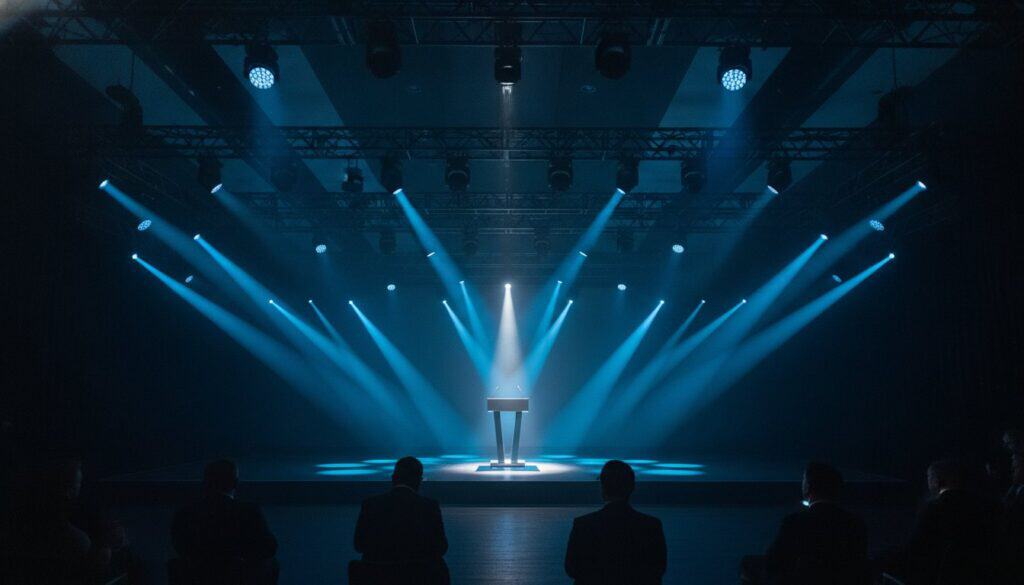
Many event planners assume a venue’s built-in lighting is sufficient, only to find it creates a flat, uninspired atmosphere. Professional event lighting is not about simply making a room brighter; it’s a technical discipline that uses light to direct attention, create a specific mood, and ensure your presenters and branding look sharp and professional.
Unlike the static lighting in a home or office, event lighting is dynamic. It must adapt to the show’s flow, from a keynote presentation to a networking session. It works alongside audio and video to create a complete technical environment, guiding the audience’s focus and reinforcing the purpose of the event.
The Difference Between Ambient Light and Production Design
The house lights in a hotel ballroom or conference centre are designed for one purpose: general illumination. They are rarely adequate for a professional corporate event because they wash out stages, create unflattering shadows, and fail to highlight key focal points. Effective lighting design uses intentional shadows and highlights to build a clean, professional stage presence.
Ultimately, production design is the bridge between a brand’s message and the audience’s visual experience.
Strategic Lighting Design for Corporate and Live Events
Effective lighting begins with the event’s objective, not the equipment. Whether the goal is to focus attention on a speaker, create an energetic atmosphere for an awards gala, or light a set for a broadcast, the lighting plan must support that primary purpose. This is a core part of how live event production integrates technology into a cohesive plan.
A professional setup typically involves several layers of light working together:
- Wash Lighting: Provides a base layer of colour and general illumination over a large area, like a stage or a dance floor.
- Key Lighting: The primary light source on a subject, such as a speaker at a lectern, ensuring they are clearly visible.
- Accent Lighting: Used to draw attention to specific elements, like corporate banners, product displays, or architectural features.
- Architectural Lighting: Highlights the features of the venue itself, using colour and texture to transform the feel of the space.
These layers bring scenic stage elements and backdrops to life, turning a simple pipe-and-drape setup into a dynamic part of the environment.
Illuminating Different Formats: From Galas to Large-Scale Festivals
The technical needs of an event change dramatically with its format. Corporate conferences in Toronto and the GTA require crisp, clear lighting that keeps the focus on the content and presenters. For high-end galas and fundraisers, the goal is often to create an intimate, evocative atmosphere that encourages conversation and engagement.
In contrast, festivals and large outdoor events throughout Southern Ontario’s Windsor corridor demand high-energy, dynamic lighting systems capable of covering large areas and creating a powerful visual impact that matches the sound.
The Hybrid Reality: Lighting for the Camera
When an event is broadcast or recorded for virtual and hybrid environments, the lighting requirements become even more specific. The human eye is more forgiving than a camera lens, which can exaggerate shadows and colour imbalances. A setup that looks great in person may appear dark or unprofessional on screen.
For high-quality video, a foundational technique like three-point lighting (using a key light, fill light, and back light) is essential. This ensures the subject is properly lit from all angles, creating depth and eliminating harsh shadows for a clean, broadcast-ready image.
Executing Your Vision: Planning and Lighting Equipment Rentals
A successful event lighting plan moves from a technical drawing, or “lighting plot,” to a physical setup in a venue like the Markham Convention Centre. This process requires careful planning and coordination to ensure every fixture, cable, and control system is correctly placed and powered.
Our “no surprises” approach is built on early and thorough site surveys. Visiting a venue in Kitchener-Waterloo or Hamilton ahead of time allows our team to identify potential power limitations, rigging challenges, and logistical issues. This simple step prevents costly errors and delays on the day of the event.
For most corporate events, renting professional lighting is far more practical than purchasing. It provides access to a wide range of well-maintained equipment without the significant capital investment and storage costs. On-site technicians then manage the system from the Front of House (FOH), executing lighting cues that align with the rhythm of the show.
The Importance of Technical Direction and Execution
Clear communication between event planners and the production team is the single most important factor in reducing risk. A good technical director ensures that the lighting plan is not only creative but also safe, practical, and within budget. This is where Straight Street’s philosophy of planning to reduce cost delivers real value.
Our process is built on our Comfort Warranty and a commitment to all-in, transparent pricing. You get a clear plan and a firm budget, ensuring a seamless experience for every attendee. You can see examples of these principles in our past work.
Reliability in Southern Ontario: Why Local Expertise Matters
Navigating the logistics of different venues across Cambridge, Guelph, and London requires specific regional knowledge. A local partner understands the load-in procedures, power availability, and rigging points of major venues, which streamlines the entire setup process.
As a Canadian-owned firm with over 30 years of experience in Southern Ontario, we understand the regional landscape and safety standards. That local expertise ensures your event’s technical production is reliable, efficient, and professionally executed.