
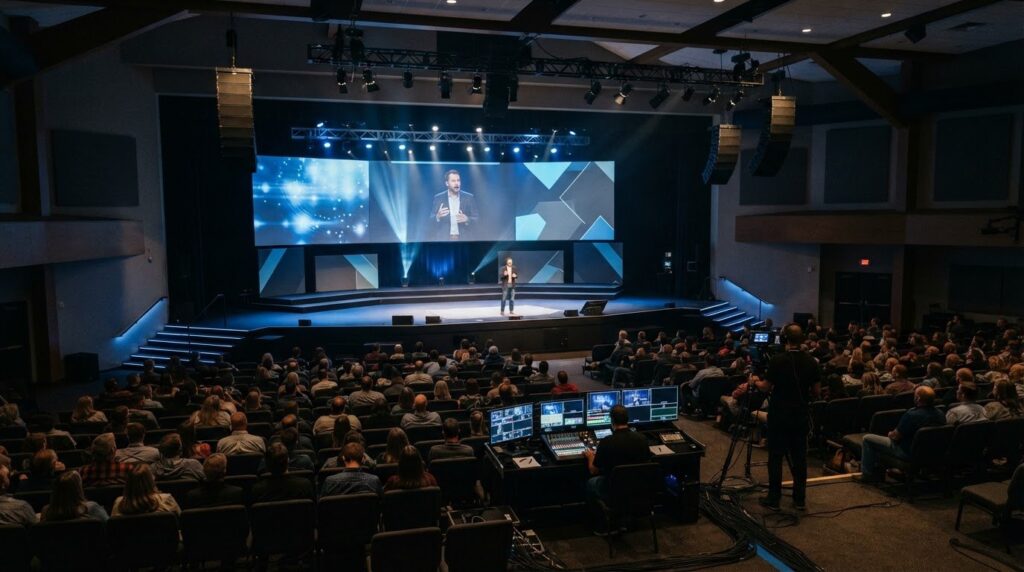
Events lose clarity when audio, video, lighting, and staging are planned separately. Coordinating these elements helps speakers stay visible and messages reach the audience.
Room layout, audience needs, and program details shape the production plan. Aligning audio video lighting staging choices helps deliver a clear, well-run event.
Key Takeaways
- Plan speaker lighting around camera framing and the visual details that need to stay clear on screen.
- Shape the audio mix for the room and audience, while accounting for what performers need to hear onstage.
- Coordinate screens, sightlines, staging, and lighting cues early, then run through the show to catch conflicts.
- For live or hybrid events, integrated audiovisual production can bring these technical elements together around the program.
Camera-ready lighting for speakers and branding
Camera-ready lighting keeps speakers clear on screen and event branding visible. Lighting choices also affect stage sightlines and speaker placement.
Lighting Cues for Speakers and Performers
A lighting cue is a planned change that supports a moment in the program. At a corporate presentation, a cue can draw attention to a speaker taking the stage, then hold steady during their remarks. At a concert, changes can follow a performer’s movement or key moments in a song. These choices help audiences know where to look, both in the room and on camera.
Stage Lighting for Event Types
Conferences often need even light on speakers and readable branding, while concerts may use varied cues to support performers. Weddings may call for a different balance, keeping speakers visible while complementing the room’s look. The right setup depends on the program, venue, camera position, and what needs to stand out. Planning these details together helps prevent bright screens or dark faces from distracting viewers.
For camera work, test how lighting, framing, and sound work together before the program begins. Video production can involve operating cameras, audio, and lighting equipment, while checking that faces and on-screen branding remain clear. Check the speaker’s position in the camera view, then adjust the lighting so details stay legible.
Speaker placement also affects sightlines. Flying speakers can reduce obstructions, while ground-supported speakers can be quicker and less costly to set up. Renting AV equipment provides gear; a full-service production company also coordinates the technical elements and their execution. Choose based on whether your team needs equipment alone or integrated production support.
Audio mixing and volume for different event settings
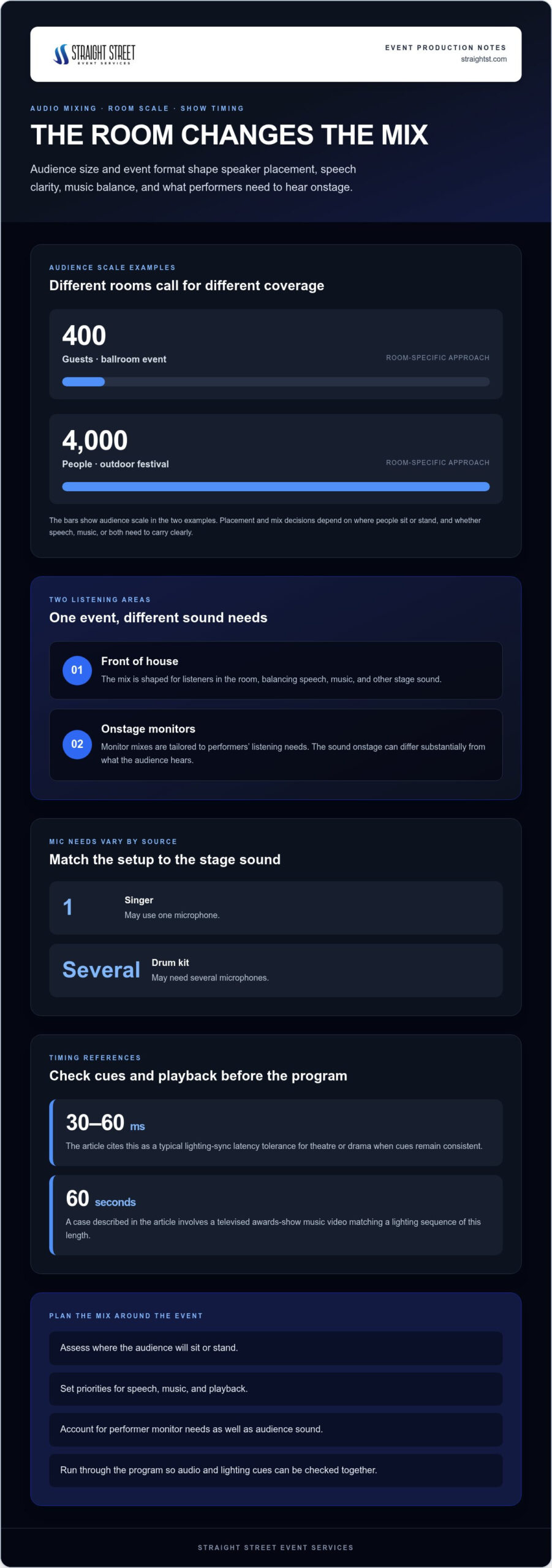
A clear mix balances speech, music, and other stage sound for the audience. The front-of-house mix is shaped for listeners in the room, while monitor mixes give performers the sound they need onstage. Requirements vary: a singer may use one microphone, while a drum kit can need several. The sound onstage can differ substantially from what the audience hears.
Room size and event format affect speaker placement and mix decisions. A ballroom event for 400 guests calls for a different approach than an outdoor festival for 4,000 people. In a long venue, strategically placed speakers operating on delay can help provide consistent coverage. During event production, assess where people will sit or stand and whether speech, music, or both need to carry clearly.
For a corporate presentation, keep speech clear and playback easy to hear without overpowering the speaker. For a concert, balance vocals and instruments for listeners throughout the venue, not just near the stage. Video also affects audio priorities: playback needs intelligible sound, while a live presenter may need a microphone ready between clips.
For event staging in Canada, permits and safety requirements depend on the venue, municipality, and setup. Power needs depend on the equipment and available supply, so include power distribution and cable routes in the production plan.
Booking timing depends on venue access, production scale, equipment, crew needs, and program complexity. Start production discussions once the date and venue are set. Complex schedules or multiple event elements need more coordination.
Clear communication about the room, run of show, and audience helps align the mix with the event, and event production support can coordinate those details with the program.
Front-of-house sound balances stage audio for the audience. Microphone needs vary by instrument: a singer may use one microphone, while a drum kit may need several. Monitor mixes are tailored to each performer’s listening needs.
Coordinating audio, video, staging, and lighting
Production choices affect one another: screen placement can change sightlines, while staging shapes camera views and cable routes. Plan these elements together so each supports the event’s message.
Event AV, Lighting, and Staging Costs
Event production costs depend on scope, equipment, venue, setup needs, and technical support. Rental costs can vary with equipment, event duration, delivery, setup, and whether technicians are needed. A screen-led corporate meeting and a live performance have different requirements, so compare complete production scopes rather than isolated equipment lists.
What Production Services Include
Event production can bring together audio equipment, video displays, lighting, staging, and the technical work needed to prepare them. A microphone, presentation screen, stage layout, and lighting plan need compatible positions and operating cues. Defining responsibilities across these elements helps prevent gaps between equipment delivery and show execution.
Planning Screens, Projectors, and Live Streaming
Start with what the audience must see, then position screens or a projector around seating and camera views. Check that stage content is legible from the room and within the camera frame; LED walls can show moiré patterns on camera. For a livestream, include camera views, audio, lighting, and screen content in the same run-through.
Preventing AV and Staging Risks
Common coordination risks include blocked sightlines, cable routes that conflict with setup, and video or lighting cues that miss their timing. Flying speakers can reduce sightline issues, while ground-supported systems are quicker and less costly to set up. Rehearse the complete show before going live and document manual adjustments, such as cue changes or screen positioning.
Plan coordinated event production around the room, program, and audience needs.
Audio crews set up microphones and run cables as equipment is loaded in and prepared, so coordinate these tasks with staging access. Check LED walls on camera during setup to identify and address moiré patterns.
For theatre or drama, typical lighting-sync latency tolerance is 30-60 ms when cues remain consistent. The case study describes a televised awards-show music video that must match a 60-second lighting sequence.
Straight Street Event Services: Live Event Audio visual Production Services
Straight Street Event Services provides Live Event Audio visual Production Services for events that need coordinated sound, screens, lighting, and staging. The team also offers Audio Production Services, Video Production Services, and Hybrid Event Production Services. This is a practical fit when your program depends on clear communication across the room and online, or when technical elements need to work together.
Rather than treating production as an equipment list, Straight Street builds the technical approach around the event’s purpose. All-in, transparent pricing helps clarify the scope, and the Comfort Warranty is part of the company’s commitment to service.
To discuss production for your event, contact Straight Street Event Services.
Set the Production Direction Before the Event
Before confirming production details, define what your audience needs to hear, see, and remember. That message can guide decisions about audio, video, lighting, and staging, while the program and venue shape how they work together. Share your priorities and run of show early so the technical approach supports the event rather than competes with it.
Straight Street Event Services offers Live Event Audio visual Production Services, Hybrid Event Production Services, and Audio Production Services for events with different formats and production needs. If you’re ready to discuss the technical direction for your event, contact Straight Street Event Services. A clear starting point can help move your plans forward with confidence.
Frequently Asked Questions
How do I choose the right sound system for an event venue and audience size?
Match the sound system to the venue’s acoustics, audience layout, and program, not capacity alone. Consider balconies, partitions, and reflective surfaces that can affect speech clarity. For a panel discussion or a live storytelling event—similar to discussions heard on the I’m Still Rolling Podcast—plan microphone coverage for each speaker and smooth handoffs between them. For music, consider the full performance and how sound needs to reach listeners throughout the room.
What are the steps for planning AV, lighting, and staging for an event?
Start with the event purpose, program, venue layout, and audience needs. Map the technical plan to the room, including screen placement, camera views, power access, and equipment routes. Assign who manages each cue and transition, then review the run of show with the technical team. Straight Street supports events in Cambridge, Kitchener, Waterloo, Toronto, Sarnia, Windsor, Mississauga, Hamilton, London, Stratford, Guelph, St. Catherines, Niagara Falls, and Southern Ontario.