
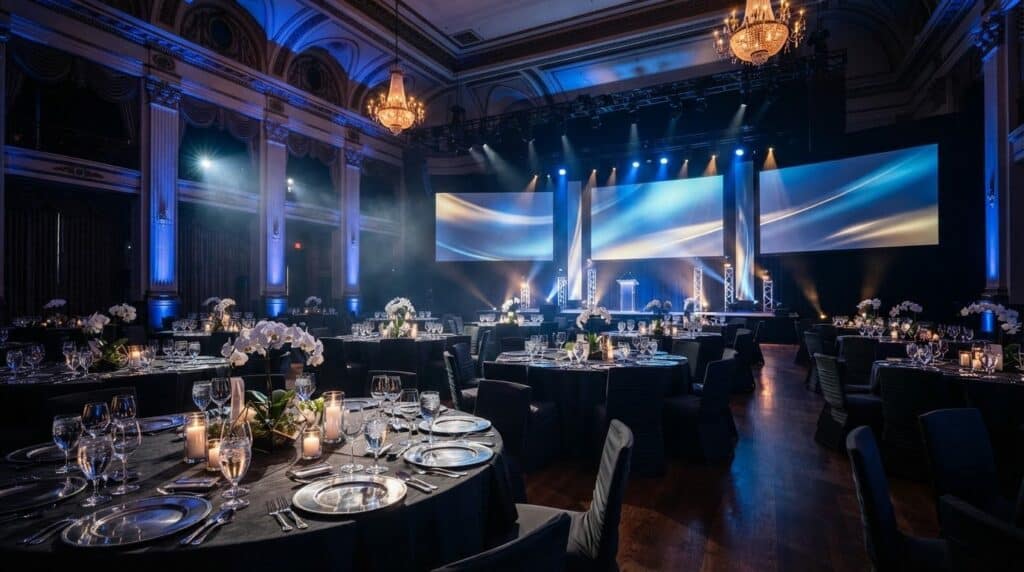
Waiting until venue contracts are signed to start your AV planning process is the fastest way to blow an event budget. You likely know the frustration of uncovering inadequate room power, low ceiling heights, or surprise invoice add-ons for cables and extra crew labour days before show day. When technical production is treated as an afterthought, costly compromises are inevitable.
Bringing an audiovisual partner to the table early protects your timeline and keeps your budget predictable. In this guide, you will learn the exact technical milestones required to coordinate production from initial site visits to load-in, avoiding unexpected expenses through clear communication and all-in, transparent pricing. Here is how structuring your planning schedule early ensures your audio, lighting, and video run reliably on show day.
Key Takeaways
- Involve your technical team during early venue evaluations to confirm power capacity, ceiling clearance, and load-in access before signing contracts.
- Anchor your AV planning process around structured discovery and a physical site inspection to resolve rigging and acoustic challenges early.
- Prevent budget inflation by securing quotes that detail delivery, setup labour, and strike costs rather than partial equipment estimates.
- Protect live presentations from unexpected technical glitches by establishing backup equipment channels and clear procedures for last-minute file updates.
When to Begin the AV Planning Process for Your Event
The ideal time to start your AV planning process is during early venue selection, well before you sign a facility contract. Most venue coordinators can confirm square footage, but they rarely understand three-phase power draws, ceiling load capacities, or acoustic reflections. Whether collaborating with dedicated producers like AMA Event Management or an internal team, bringing AV specialists into the venue walkthrough early prevents booking a room with low hanging fixtures, obstructed sightlines, or inadequate loading dock access that requires extra crew labour to navigate.
Early vendor engagement also locks in essential hardware and skilled crews before regional schedules fill up. Throughout Southwestern Ontario and the GTA, high-demand equipment and certified audio engineers book up quickly for peak fall and spring convention dates. Integrating live event production partners ahead of time guarantees that critical lighting, audio, and video gear are reserved specifically for your room layout.
Key Timeline Milestones from Concept to Run-Through
Establishing clear technical benchmarks keeps your schedule realistic and helps your team manage vendor dependencies without last-minute scrambling. Experienced producers such as Fruitbowl Events Agency recommend mapping out each phase from initial concept through pack-down to keep deliverables on schedule:
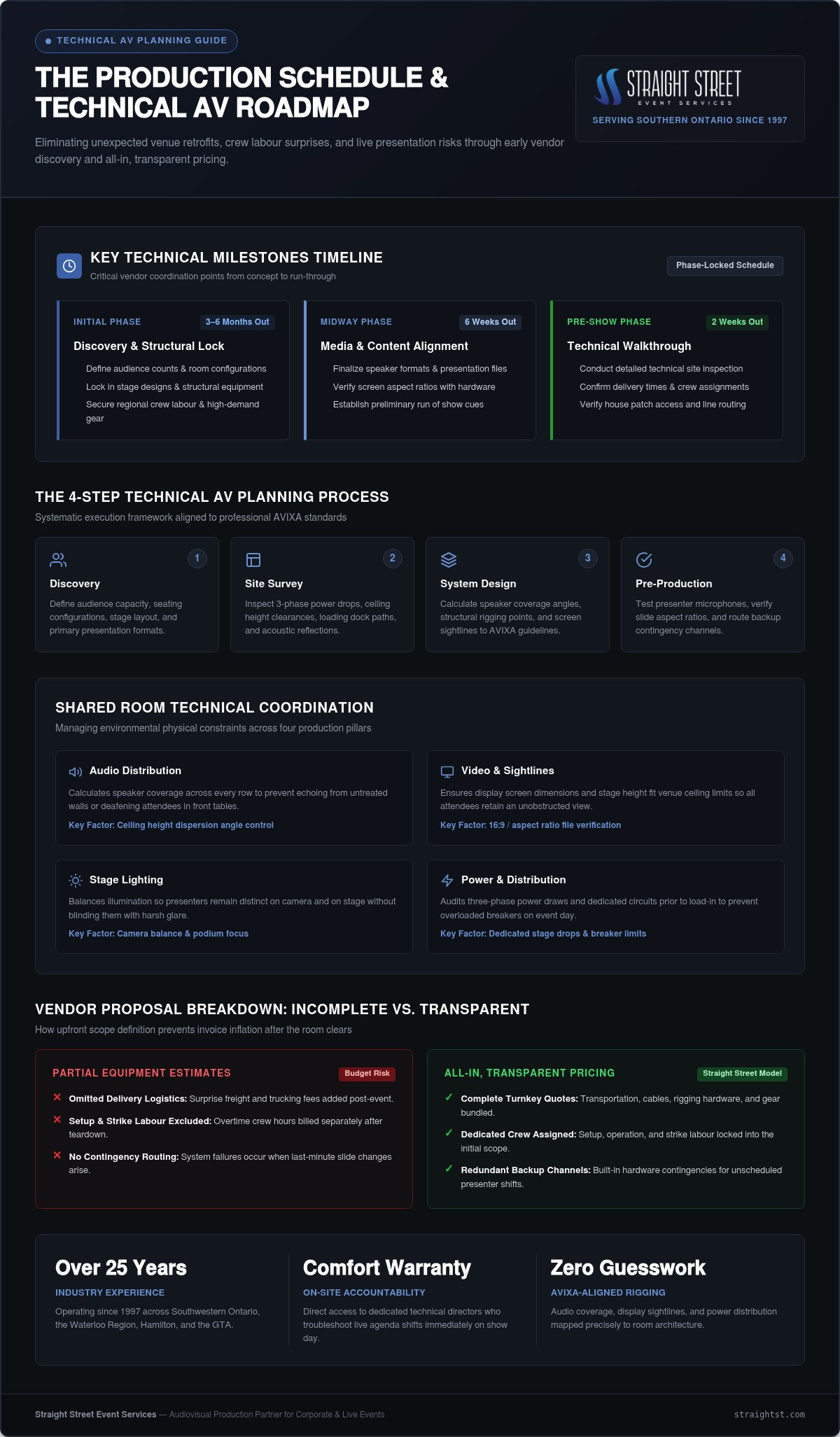
- Three to six months out: Define audience counts, room configurations, and primary presentation requirements to lock in stage designs and structural equipment.
- Six weeks out: Finalize speaker formats, screen aspect ratios, and your preliminary run of show so media playback requirements match system hardware.
- Two weeks out: Complete a detailed technical walkthrough, confirming equipment delivery times, crew assignments, and house patch access.
Modern corporate presentations depend on integrated Audiovisual (AV) infrastructure to deliver speech clearly and display graphics cleanly. Walking through these staging milestones months in advance eliminates unexpected venue power retrofits, ensures equipment availability, and keeps every phase of the AV planning process completely on track.
The 4-Step Technical AV Planning Process
A dependable AV planning process relies on systematic discovery rather than guesswork. First, establish audience capacity, seating configurations, and presentation formats. Second, conduct a physical site survey to inspect venue power drops, measure ceiling clearance, and check acoustic reflections. Checking electrical distribution early prevents overloaded circuits and expensive emergency power runs. Third, design the equipment setup, aligning speaker coverage, rigging points, and displays to professional AVIXA standards. Fourth, run technical checks during pre-production to test media files and presenter mics.
Coordinating Audio, Video, and Stage Lighting Requirements
Balancing technical systems in a shared room requires looking at how each component interacts. Sound distribution calculations ensure consistent audio coverage across every row without deafening front tables. Even high-end speakers suffer if ceiling heights compress dispersion angles or echo off untreated walls. Display choices must fit within venue ceiling limits so the entire room has an unobstructed line of sight. Coordinating live event production stage lighting keeps presenters clearly visible for cameras and attendees without casting harsh glare into their eyes.
If you are coordinating venue logistics across Southern Ontario, partnering with an experienced team for audiovisual production ensures your technical staging fits the physical space.
Preventing On-Site Technical Issues Through Transparent Partnerships
Unclear vendor proposals create friction late in the event schedule. Initial equipment estimates frequently look affordable because they quietly omit delivery logistics, overtime setup labour, and post-event strike costs. Working with a dedicated crew ensures those operational requirements are accounted for from day one. Experienced technicians build contingency channels into your signal routing to absorb last-minute slide ratio shifts or unscheduled presenter additions without interrupting the schedule.
Transparent Invoicing and the Straight Street Comfort Warranty
Scrutinizing line items early prevents invoice surprises after the room clears. A reliable AV planning process relies on all-in, transparent pricing that packages gear, transportation, and technical labour together without hidden surcharges. That clarity gives your team peace of mind, knowing every audio channel, lighting fixture, and power run is accounted for before load-in begins.
With our Comfort Warranty, you receive direct communication with on-site technical directors who can troubleshoot live changes immediately. Having seasoned professionals running your boards eliminates panic when agendas shift during the show. Operating since 1997, Straight Street Event Services applies over 25 years of hands-on experience across the Waterloo Region, GTA, and Southwestern Ontario to keep your technical execution reliable.
Take Control of Your Event Production Schedule
Starting early is the single most effective way to eliminate technical surprises, protect your budget, and keep your presenters confident. An intentional AV planning process gives your team the space to audit venue infrastructure, lock in skilled crew members, and secure clear quotes before logistical issues arise.
With over 25 years of production experience across Southern Ontario, an accredited BBB A+ rating since 2019, and CAVPA membership, our team knows how to execute live setups reliably. As a multi-year Consumer Choice Award winner in Kitchener-Waterloo, including 2026, we prioritize practical communication from day one. When you are ready to remove uncertainty from your calendar, plan your next event with Straight Street Event Services.
Frequently Asked Questions
How far in advance should I start the AV planning process?
You should begin the AV planning process at least three to six months before a corporate conference or gala, and up to nine to twelve months for large conventions. Engaging a production team early ensures equipment availability across Southern Ontario during peak seasons. It also lets your team evaluate room specs before signing venue contracts.
What technical details does an AV company need from the venue?
Your production crew needs exact room dimensions, ceiling clearance heights, power drop availability, and loading dock access specifications. They also review house sound patch points, wall materials for acoustic reflections, and structural rigging limits. Gathering these physical details during early site visits prevents costly on-site electrical retrofits and sightline obstructions.
Why is an independent AV partner preferred over in-house venue equipment?
An independent partner works directly for your interests rather than pushing rigid in-house equipment packages that might not fit your presentation format. Dedicated production providers bring consistent crew members who understand your exact technical requirements from discovery to strike. They provide customized gear setups, dedicated on-site technicians, and consistent technical direction across multiple venues or cities.
What is included in an all-in production quote?
An all-in production quote covers the complete scope: audiovisual hardware, transportation logistics, setup labour, live show technical operators, and post-event strike. Unlike partial estimates that leave out cables or stage hands, transparent pricing outlines every itemized operational cost upfront. This clarity eliminates surprise invoice charges after the event concludes and protects your overall budget.