
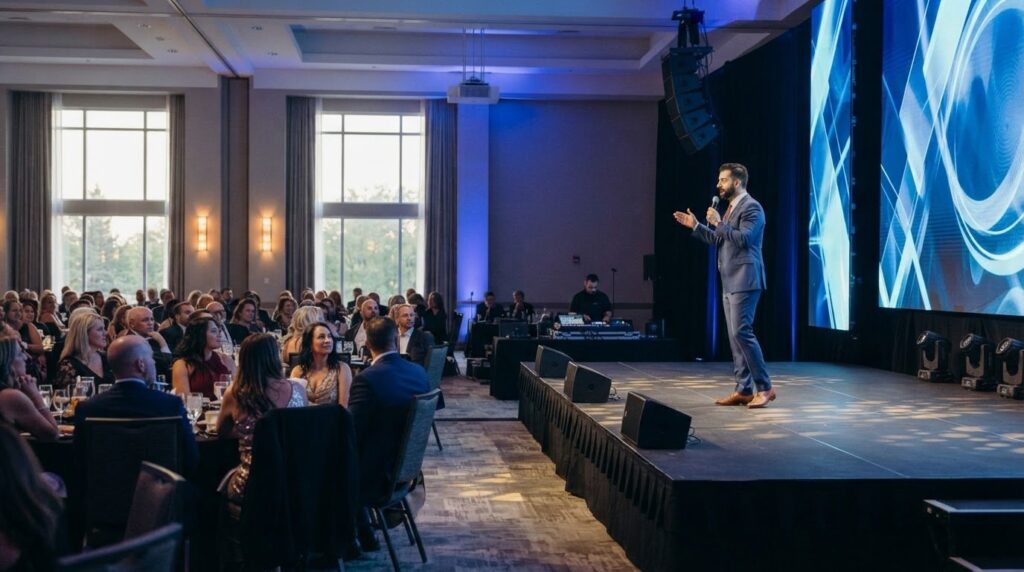
When a fundraising ask is hard to hear or the next step isn’t clear, the moment can lose its purpose. AV production for gala events supports the ask with clear sound and on-screen information that reinforces the speaker’s directions, while lighting and staging help guests focus. For social events such as galas, begin searching for and booking an event production company 6-12 months ahead, so the team can plan around the venue, program flow and technical needs.
Key Takeaways
- Plan room illumination around table layouts, sightlines, screens, and the cues that guide attention through the evening.
- Match the audio system to the program, so speeches and live performances can be heard clearly across the room.
- Coordinate production timing with the venue’s catering schedule and the event’s run of show to manage changes smoothly.
- Choose rentals and on-site production support based on the room, program, and how guests will use each space.
Lighting design
AV production for gala events should be planned around the program, room layout, and schedule. Audio, video, and staging also shape where guests look and how each cue works.
Map cues to key moments, such as guest arrival, dinner, awards, and the fundraising presentation. Coordinate changes with projection and graphics so screens stay readable. If the event is being filmed, keep speakers and award recipients visible as the cues shift. A cue sequence gives the production team a clear reference throughout the event.
Theme-Matched Programming
Colour and timing can reflect the event theme and distinguish program segments. For example, a cue can draw attention to the stage as an awards presentation begins. Review planned changes alongside screen content and staging so the room’s atmosphere does not distract guests from speakers or performances.
Sightlines for Screens and Stage
Review screen placement and stage illumination from guest tables, walkways, and the back of the room. Check that projected graphics remain visible and that guests and cameras have a clear view of speakers. Coordinate audio coverage for those same positions so guests can follow spoken directions while watching the screen or stage.
For gala entrances that use a runway, fashion show production demonstrates why stage design and camera positions need to work together. The production team can coordinate these elements with projection, audio cues, and the run of show. Clear cue timing helps manage transitions between dinner, presentations, and performances while keeping the room suited to each moment.
Include table placement, sightlines, screens, and audio in gala production planning early. Considering these elements together from the start connects the room to the wider production plan. The team can use this shared set of considerations when reviewing the event layout and planned production elements, rather than addressing each on its own. Keep these factors in view as planning progresses.
How far in advance should I book an audio visual event production company for my social event?
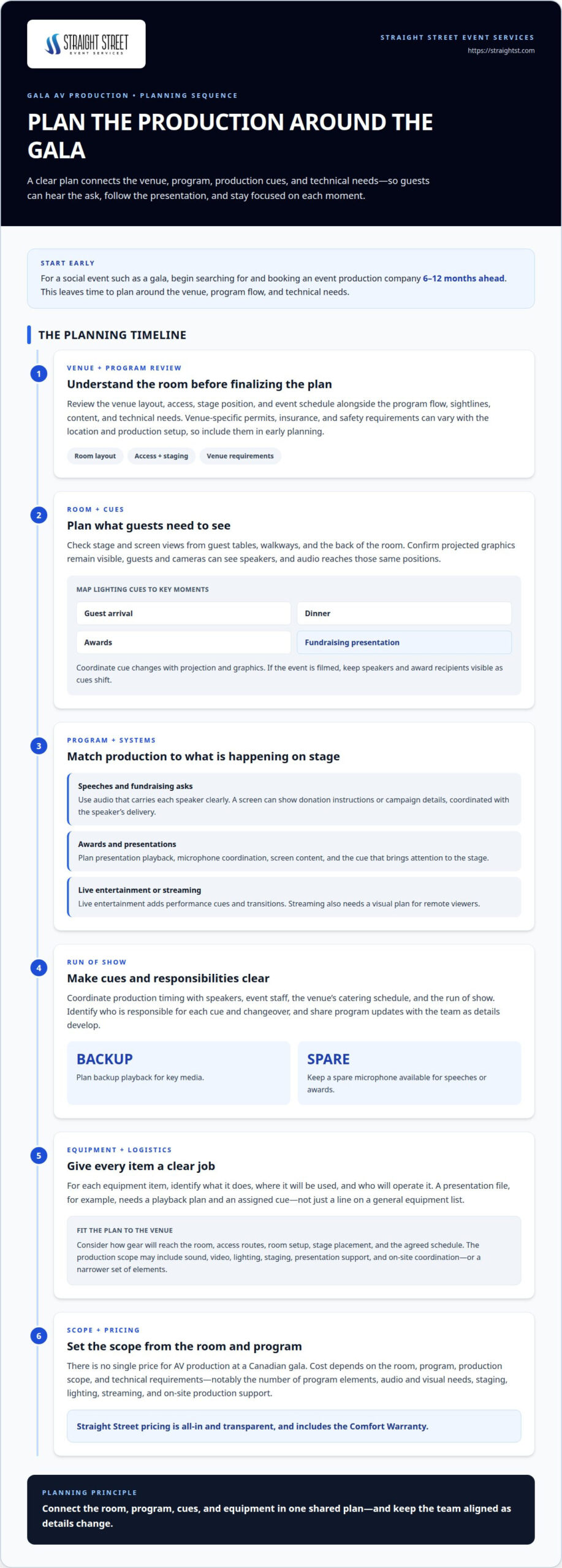
For a social event, begin searching for and booking an AV production company 6-12 months ahead. Early planning leaves time to assess the venue, program flow, sightlines, content, and technical needs before the event plan is finalized. A gala dinner with speeches, awards, and live entertainment needs different audio visual decisions than a member gathering centred on one presentation.
For speeches, the audio system must carry each speaker clearly across the room. Live entertainment adds performance cues and transitions, while streaming also requires a visual plan for remote viewers. A conference-style presentation may need its own playback and microphone coordination. The event’s vision, venue layout, and evening schedule shape the production plan. Audio production brings those speech and performance needs into focus.
Permits, insurance, and safety requirements can depend on the venue, location, and production setup. Build venue-specific conditions into the plan early, including access, staging, and equipment placement. Requirements can differ from one gala venue to another.
There’s no single price for AV production at a Canadian gala. The cost depends on the room, program, production scope, and technical requirements, so a dollar figure without those details would be misleading. Pricing factors include the number of program elements, audio and visual needs, staging, lighting, streaming, and on-site production support. Straight Street’s pricing is all-in and transparent, and includes the Comfort Warranty.
To reduce live-event risks, coordinate a run of show with speakers, event staff, and the production team. Plan backup playback for key media and a spare microphone for speeches or awards. Clear cues help the team adapt if timing changes and keep track of what comes next.
At a fundraising gala, AV needs depend on the room, program, and how guests use the space. Common elements include audio, video, lighting, presentation support, and on-site production coordination. Define the production scope by listing what each program moment requires.
Event production and equipment rentals
Straight Street Event Services coordinates technical details around the purpose of your gala. Equipment is only one part of the plan: presentations, award segments, and performances also need to work with the audiovisual setup and experienced operators. Straight Street provides support for corporate and fundraising events.
A useful equipment list identifies what each item needs to do, where it will be used, and who will operate it. This helps distinguish essential items from those that do not support the program. For example, a presentation file needs a playback plan and an assigned cue, not just a place on a general list.
Coordination also considers how gear will reach the venue and fit into the room. Access routes, room setup, stage placement, and the agreed schedule all inform the plan. Share program updates with the team so the schedule stays aligned as details develop.
Some galas need a coordinated technical plan for sound, video, lighting, and staging; others need a narrower set of elements. The right scope depends on the event’s goals and how guests will use the room. Straight Street’s audiovisual services and equipment rentals can support a tailored plan, with recommendations based on the program, venue, audience, and budget rather than a fixed package.
Clear roles matter on event day: the schedule should show who is responsible for each cue and changeover. Straight Street Event Services can coordinate details with the organizer and venue, helping reduce uncertainty before guests arrive. To discuss your gala, contact Straight Street Event Services.
Frequently Asked Questions
How can AV help during a fundraising ask?
Clear microphone audio helps guests follow the speaker, while a screen can display donation instructions or campaign details. Coordinate the visual cue with the speaker’s delivery so guests know what action to take.
How does an AV production company ensure the equipment and setup will work well in your event venue?
The production team reviews the room layout, access, power, stage position, and event schedule, then matches equipment placement to the venue. This surfaces practical constraints before setup and helps avoid conflicts with other event operations.
What AV does a fundraising gala typically need?
Common needs include microphones and audio for speakers, room illumination, staging, and video or projection for awards and campaign content. Live entertainment or remote guests may call for additional production elements, depending on the program.
What AV production services are needed for a gala event?
A gala may use audio, lighting, staging, video, technical direction, and on-site technicians. Straight Street Event Services provides audiovisual production for events in Cambridge, Kitchener, Waterloo, Toronto, Sarnia, Windsor, Mississauga, Hamilton, London, Stratford, Southern Ontario, St. Catherines, Niagara Falls, and Guelph.
How far in advance should you book AV production for a gala?
Start the booking process 6-12 months before the event. Once the date and venue are set, the production team can develop the technical plan alongside program decisions and coordinate venue requirements.