
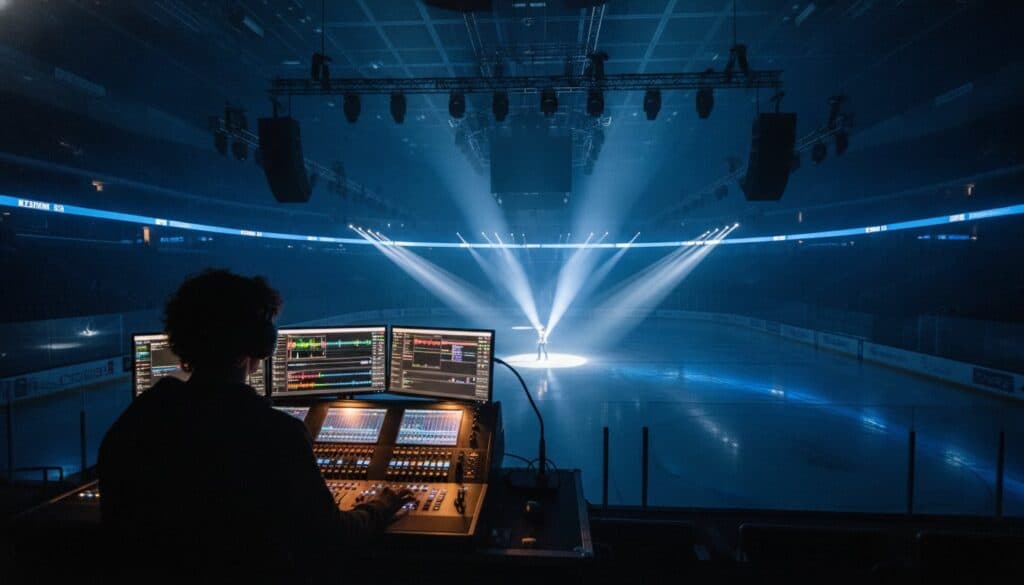
Producing an ice show in a large arena presents unique technical challenges, from poor acoustics to harsh lighting glare on the ice. Without a specialized audio-visual plan, these issues can detract from the skaters’ performance and the audience’s experience. Behind every great ice show is a strong AV production team that understands how to manage these specific environmental factors.
The Rink Environment: Overcoming Unique AV Challenges
An ice rink is not a standard stage. The combination of cold temperatures, reflective surfaces, and cavernous acoustics requires a different approach to AV production than a typical corporate event. Ignoring these factors often leads to equipment issues and a poor audience experience.
Acoustic Clarity in High-Volume Spaces
Hockey arenas are built with hard, reflective surfaces like concrete, plexiglass, and ice, creating a natural echo chamber. Standard audio setups result in muddy, unintelligible sound where music and announcements are lost in the reverberation.
To achieve clear audio, we use strategic speaker placement, often employing distributed audio systems or line arrays. This technique directs sound toward the audience and away from reflective surfaces. Careful tuning and delay settings ensure that everyone, from the front row to the back, hears the performance cues and music clearly and in time with the skaters.
Environmental Protection for Technical Gear
The cold, damp environment of an ice rink can be damaging to sensitive electronics. Condensation is a major risk, capable of short-circuiting lighting fixtures, video projectors, and audio consoles. Professional equipment is built to be more robust, but it still requires careful management.
Our process includes allowing all equipment to acclimate to the arena’s temperature before powering it on. We also use specialized casing and weather protection where necessary. Testing all gear in the actual environment long before the audience arrives is a critical step to confirm everything functions correctly under show conditions.
Lighting and Video: Crafting a Clear Visual Experience
Lighting an ice show is a careful balancing act. The goal is to highlight the speed and grace of the performers without creating dangerous glare on the ice or blinding the skaters. At the same time, lighting and video are essential for creating atmosphere and ensuring everyone has a great view.
Techniques like using steep lighting angles, gobos to texture the ice, and proper follow spot operation are key. Video elements, such as projection mapping or LED walls, can add a dynamic backdrop but must be integrated carefully to complement, not distract from, the on-ice performance.
Professional Event Lighting Production
Effective lighting guides the audience’s focus and supports the choreography. We use a combination of static lights to create a base wash of colour and automated fixtures to add movement and highlight specific moments.
Follow spots remain a critical tool, as automated tracking systems often can’t keep up with the speed and unpredictable movements of high-level skaters. A skilled human operator ensures the performer is always perfectly lit. All of this is controlled through a central console, allowing for precise, pre-programmed cues that align perfectly with the music and action. For more information on our approach, see our work with professional event lighting in Kitchener and Waterloo.
Visuals for Scale and Story
In a large arena, video screens or projection can bring the action closer to audience members seated far from the ice. This can be as simple as a live camera feed on large screens or as complex as projection mapping that turns the entire ice surface into a dynamic digital canvas.
When using video, brightness and content must be managed to ensure they enhance the show. The goal is to provide visual support that adds to the scale of the performance without pulling focus from the talented athletes on the ice.
Strategic Technical Direction: Ensuring a No-Surprises Performance
A successful ice show depends on precise timing and communication between the artistic director, skaters, and the technical crew. The Technical Director (TD) is the person responsible for ensuring the artistic vision is executed flawlessly from a technical standpoint.
This role involves extensive pre-production planning, managing the crew, and calling technical cues during the show. Based in Cambridge, our team has managed the logistics for shows in arenas across Southern Ontario, from Toronto to Kitchener-Waterloo and the Windsor corridor. Our process is built on clear communication and a “No Surprises” philosophy, which is why we offer a Comfort Warranty and all-in, transparent pricing.
The Pre-Show Technical Audit
The dress rehearsal is where the technical and artistic elements come together for the first time. We use this opportunity to run a full technical audit, stepping through every audio, lighting, and video cue in sequence with the performers.
This is also when we verify power requirements. A complex show with extensive lighting and video can draw a significant amount of power, and it’s crucial to confirm that the load is balanced to prevent tripping a breaker mid-performance. This detailed check is a key part of our risk mitigation strategy.
Partnering for Execution
This collaborative approach ensures there are no miscommunications between the creative vision and the technical execution. By handling the complex logistics of power, rigging, and equipment, we allow you to focus on the performance itself. To learn more about how we approach this, review our AV planning tips for seamless Southern Ontario events.
Ultimately, the technical production for an ice show should support the performers without drawing attention to itself. Success is measured by clear audio, dynamic lighting that serves the skaters, and a smooth, uninterrupted performance. It is achieved through specialized knowledge of the unique arena environment and a rigorous planning process.