
Technical failures and last-minute AV changes can derail an otherwise well-planned event, creating unnecessary stress for organizers and a poor experience for the audience. To make your next event easier with proper AV planning, the process must begin long before any equipment is loaded into a venue. It starts with a clear understanding of your goals and a commitment to communication.
By shifting the focus from a simple equipment checklist to a collaborative planning process, you can prevent common issues and ensure your message is delivered effectively, whether your event is in Toronto, Kitchener-Waterloo, or anywhere across Southern Ontario.
Aligning Technical Production with Event Objectives
Effective audiovisual production is not about having the newest or most expensive gear; it’s about using the right tools to achieve a specific outcome. Before a single microphone or light is chosen, the most important step is to define what success looks like for your event. This requires a different approach than simply renting equipment.
The technical requirements for a fundraising gala in Toronto are fundamentally different from those for a corporate conference in Cambridge. One may require warm, dramatic lighting and crystal-clear audio for musical performances, while the other needs bright, even stage lighting, multiple screens for data-rich presentations, and robust support for hybrid audiences.
Starting the conversation early with a production partner allows you to establish clear communication channels and align the technical scope with your core objectives. This ensures every piece of technology serves a distinct purpose.
The Difference Between AV Rental and Event Production
Many event organizers are unsure whether they need simple equipment rentals or full event production services. An AV rental company provides the gear, but you or your team are responsible for its setup, operation, and troubleshooting. This can be a cost-effective option if you have the in-house expertise to manage the technical side of your event.
Full event production, however, is a partnership. A production company works with you from the initial planning stages, providing technical direction, experienced technicians, and a strategy to meet your goals. They take responsibility for the entire technical execution, from design and setup to the final cue. For organizers who need a reliable outcome without managing the technical details themselves, choosing the right audiovisual production partner is a critical decision.
Practical Steps for Southern Ontario Event Production
Once the objectives are clear, the focus shifts to the practical logistics of your venue. Southern Ontario is home to a diverse range of event spaces, from modern convention centres in the GTA to historic buildings in Guelph or London. Each presents unique technical challenges that a floor plan alone cannot reveal.
A thorough plan, built on real-world information, is the best way to prevent day-of surprises. Key steps in this process include:
- Conducting a comprehensive site visit to evaluate power distribution, measure ceiling heights, identify rigging points, and plan load-in logistics.
- Mapping out the technical footprint to ensure staging, speakers, and lighting do not obstruct audience sightlines or fire exits.
- Coordinating with venue management to understand local restrictions, union labour rules, and house policies.
- Auditing the internet infrastructure, especially for hybrid events, to confirm bandwidth and stability for uninterrupted streaming.
The Site Visit: Beyond the Floor Plan
Seeing a space in person is the only way to prevent common but disruptive problems like running out of cable or discovering that a load-in door is too small for the stage. This is particularly true in Southwestern Ontario’s many heritage buildings, which may have limited power, uneven floors, or structural elements that interfere with ideal equipment placement. A detailed site visit allows a technical director to anticipate these issues and develop a functional plan.
Managing Hybrid Event Requirements
For hybrid events, planning must account for two distinct audiences. The goal is to ensure the virtual audience feels as connected as those attending in person. This involves more than just pointing a camera at the stage; it requires dedicated planning for broadcast-quality audio, multi-camera video production, and redundant signal paths to protect against internet dropouts.
Partnering for Reliable Event Production
A successful event is built on trust and transparency between the organizer and the production team. The “no surprises” approach is a core principle that guides every step, from the initial quote to the post-event teardown. This philosophy ensures you have a clear and accurate understanding of the costs and logistics involved.
At Straight Street, our quotes are built on a foundation of all-in, transparent pricing. We believe you should know the full cost upfront, without worrying about hidden fees or last-minute additions. This financial clarity is a key part of building a reliable partnership and is central to how we approach transparent AV budgeting.
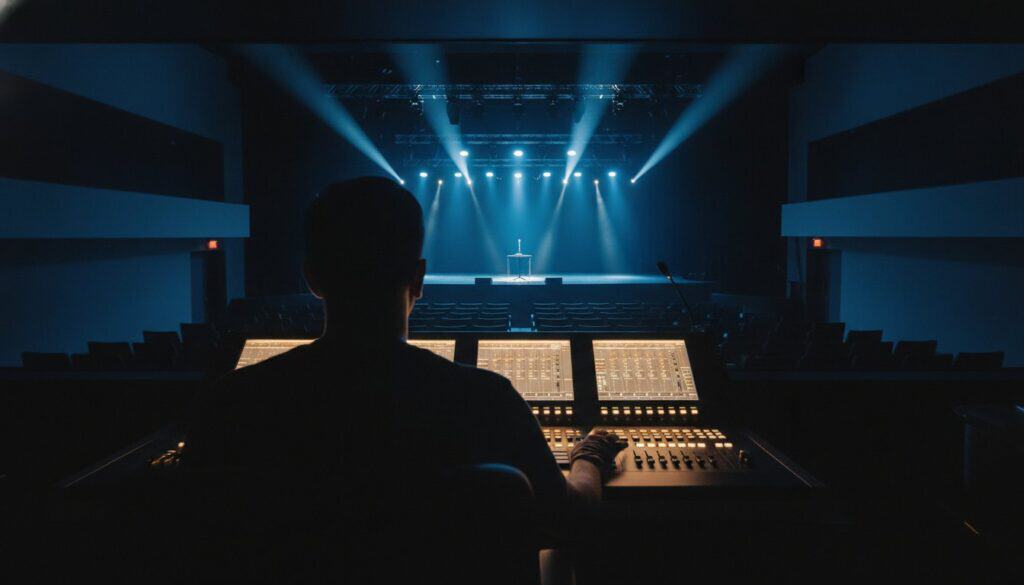
This reliability extends to the on-site execution. A technical rehearsal schedule gives speakers the chance to get comfortable with microphones and presentation monitors, while a dedicated technical director manages the show’s flow from behind the scenes. This level of preparation and oversight is what ensures a professional result.
Communication as Risk Management
Clear communication is the most effective tool for managing risk. A detailed technical rider provided to the venue ensures everyone is on the same page regarding power needs, load-in times, and setup requirements. Regular check-ins between the event planner and the technical director prevent misunderstandings and allow for adjustments as the event plan evolves.
This collaborative approach is fundamental to our live event production services. We operate as an extension of your team, focused entirely on the successful technical delivery of your event. Our commitment is backed by our Comfort Warranty, which guarantees that our team and equipment will be ready and reliable, giving you peace of mind.
The Final Technical Audit
In the 24 hours before your event begins, a final technical audit is performed. This involves a systematic check of all audio, video, and lighting systems to confirm they are functioning and synchronized. Every microphone is tested, every presentation is loaded, and every lighting cue is programmed. The technical director’s role is to ensure all systems are ready before the doors open, allowing you to focus on your guests.
Ultimately, proper AV planning removes uncertainty. By defining your goals early, understanding your venue’s realities, and working with a transparent production partner, you can create a stable foundation for a successful and stress-free event.