
A detailed audio-visual quote arrives, and it looks good. But when the final invoice comes after the event, it’s thousands of dollars over budget due to unexpected labour costs, missing cables, and last-minute rentals. For event planners, this is a common problem that undermines trust and creates unnecessary stress.
Effective event AV budgeting best practices are about more than just listing equipment; they involve creating a technical plan that ensures your message is delivered clearly and reliably, without financial surprises.
Beyond the Spreadsheet: Defining Your Event’s Technical Needs
An AV budget should be a direct reflection of your event’s goals. Before you can assign a dollar value to anything, you need a clear understanding of what you want to achieve and what technical elements are required to make it happen. This means shifting from an “equipment-first” mindset to a “purpose-first” approach.
Start by identifying the most critical moments of your event. Is it a keynote speech, an awards gala, or a complex product launch? These are the moments where your investment needs to perform, so they should be the priority in your budget. A well-defined budget is a strategic investment in clear communication and risk mitigation.
The Discovery Phase: Asking the Right Technical Questions
The initial planning phase is the most critical for preventing future budget issues. This is the time to ask detailed questions that connect your event’s objectives to specific technical requirements. A professional production partner will guide you through this process, focusing on key areas:
- Core Message: What is the primary message you need to communicate, and what is the most effective way to deliver it? Does it require large video screens for data, crystal-clear audio for a soft-spoken presenter, or specific lighting to highlight a new product?
- Audience and Venue Scale: The size of your audience and venue has a direct impact on AV needs. A conference in a large Toronto convention centre requires a different audio solution than an intimate gathering in a Hamilton hotel, and your budget must reflect that reality.
- Priorities: It’s essential to distinguish between the “must-haves” and the “nice-to-haves.” A “must-have” is any element whose failure would compromise the event’s core purpose, like a reliable microphone for your CEO. A “nice-to-have” might be decorative uplighting that adds to the atmosphere but isn’t critical to the message.
Balancing Vision with Practical Constraints
Every event planner has a vision, but it must be balanced with the practical realities of a budget. Communicating your goals to a live event production partner early in the process is the key to aligning your vision with a realistic financial plan.
It can be tempting to choose the provider with the lowest bid, but this approach often leads to problems. A quote that seems too good to be true may be missing essential items or underestimating labour costs, leading to technical failures or a much larger final bill. A true partner works with you to find solutions that fit your budget without sacrificing quality on the essential elements.
This commitment to quality and transparency is a hallmark of premium service providers across various industries; for instance, Heron And Burke Construction follows a similar philosophy when managing luxury custom home projects.
Strategic AV Allocation: Where to Invest for the Best Results
Once you have a clear plan, the next step is to allocate funds strategically. Not all AV components are created equal, and knowing where to invest—and where you can potentially save—is a hallmark of professional event management. Certain areas should never be compromised.
For example, audio is non-negotiable. If your audience can’t hear the message, the entire event fails. Cutting corners on microphones, speakers, or a qualified audio technician is one of the most common and costly mistakes an event planner can make. Similarly, the technician behind the console is just as vital as the gear itself; experienced labour is an investment in a smooth, problem-free execution.
Professional Event Lighting and Staging
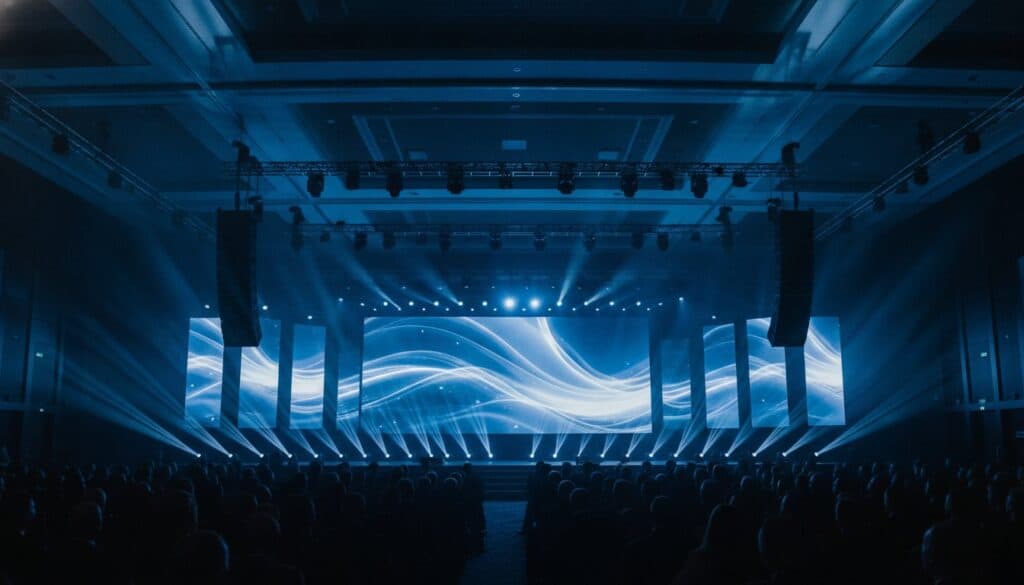
Lighting does more than just illuminate a room; it directs focus, creates a professional atmosphere, and can transform a standard Mississauga ballroom into a branded environment. Professional event lighting is a critical tool for keeping your audience engaged. Paired with the right staging, it creates visual interest and ensures your presenters are seen clearly from every seat.
A well-planned AV design can also reduce costs by ensuring you only pay for what you need. Instead of ordering equipment from a generic price list, a production partner can design an integrated system that eliminates redundant gear and labour, saving you money in the long run.
The Hidden Costs of Hybrid and Virtual Events
For hybrid events, you are essentially running two shows at once. This requires budgeting for the “second audience” watching remotely. Key costs that are often overlooked include dedicated, high-speed bandwidth and the streaming infrastructure needed to deliver a stable, high-quality broadcast. You will also need a technical director who can manage the complexity of both the in-room and online experiences simultaneously, which is a different skill set than managing a simple live event.
The “No Surprises” Framework: Planning for Execution
The ultimate goal of any AV budget is predictability. A “no surprises” approach is built on transparency, thorough planning, and clear communication. This framework turns your budget from a static document into a reliable roadmap for a successful event.
This process always starts with a site visit to assess the logistical realities of venues, whether in Kitchener, Niagara Falls, or downtown Toronto. It also includes contingency planning—a small percentage of the budget set aside to cover unforeseen issues. At Straight Street, our quotes are built on a foundation of all-in, transparent pricing, ensuring every line item has a clear purpose. It’s a commitment backed by our Comfort Warranty, so the price you approve is the price you pay.
Logistics and Southern Ontario Venues
Every venue has its own set of logistical challenges that can impact your AV budget. In major Toronto centres, this can include strict loading dock schedules and union labour rules. Across the Windsor-to-Toronto corridor, factors like travel time and trucking costs for getting gear and crew to site must be accounted for. An experienced local production company will know to ask about power availability to support your lighting and audio plans and will build these regional logistics into the budget from day one.
Finalizing the Budget with Your Production Partner
Before signing off, a final review with your production partner is essential. This is an opportunity to look at their past portfolio of work to see how similar budgets have been used to achieve high-quality results. The final step should be a technical audit to check for any gaps or potential points of failure before the first truck arrives.
Clear communication between the event planner and the AV team prevents the vast majority of event-day issues. A budget isn’t just a spreadsheet; it’s a living document that requires ongoing dialogue to remain accurate and effective.
Practical Takeaway: The best event AV budget is one that has been pressure-tested by practical questions and real-world logistics. By focusing on your core objectives and working with a transparent production partner, you can create a financial plan that protects your event from technical failures and surprise costs.