
Outdoor charity events can be difficult to hear and follow when sound, microphones, and livestreaming aren’t planned for the site and program. Fundraising event AV helps keep speakers clear for guests on-site and supporters joining remotely, while aligning production with the event’s purpose and budget. Here’s what to consider for outdoor sound, livestreaming, and hybrid production.
Key Takeaways
- Plan microphone coverage around who speaks and how the auction or donor activities move, so key moments remain clear to guests.
- Coordinate the stream with the live program, including speaker changes and transitions, to support remote attendees as well as the room.
- Match production choices to the event’s purpose and format; clear scope and communication help manage budget risks.
- See how Straight Street Event Services can bring audio, video, lighting, staging and livestream production together for a fundraiser.
Outdoor sound systems and microphones for charity events
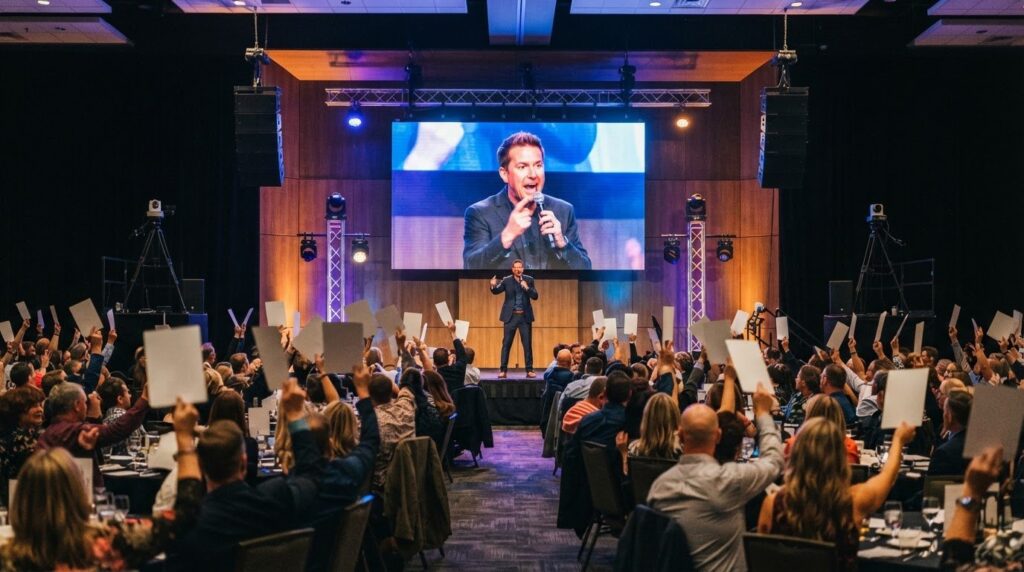
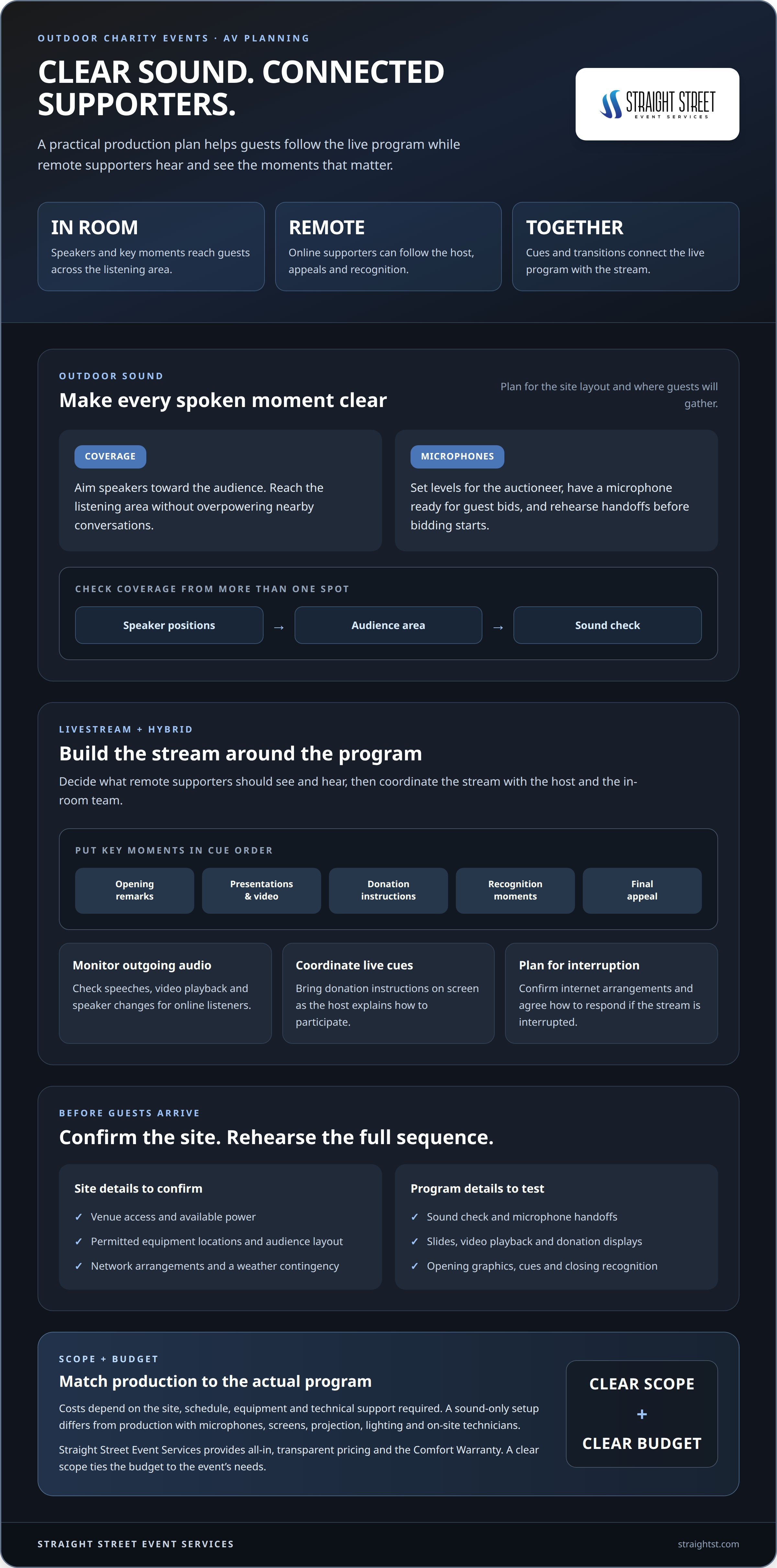
Outdoor sound should reach guests across the listening area without overpowering nearby conversations. For a live auction or paddle raise, aim speakers toward the audience and set microphone levels for the auctioneer’s voice. Have a microphone ready for guest bids, and plan handoffs before bidding starts. The production plan should reflect the site layout and where guests will gather.
Choose a production team that asks about the site, schedule, auction format, and speaking positions before recommending a setup. For speeches and auctions, plan microphones for the speakers and auctioneer, then test coverage from different parts of the audience area. Rehearse handoffs and transitions before guests arrive.
Production costs depend on the site, schedule, equipment, and technical support required. A sound-only setup differs from a production with microphones, screens, projection, lighting, and on-site technicians. A clear scope ties the budget to the event’s actual program and includes only the elements it needs.
Lighting and staging should keep speakers visible and give presentations a clear focal point. Stage lighting can draw attention to an auctioneer, while uplighting adds colour around the event area. The right choices depend on the site, program, and audience sightlines.
Common risks include uneven sound coverage, delayed microphone handoffs, and display changes that miss the auction sequence. A production plan should include a sound check, a run-through of key transitions, and a backup playback plan. Technical support can coordinate cues as the program changes.
For live auctions, a projector or screens can show item details, bid amounts, and donor recognition. During pledge drives, coordinate donation displays with the host’s cues so updates are clear and timely. Silent auctions benefit from readable item information and lighting that lets donors see the displays. Production can also support community campaigns with presentations and donor activities.
Before the event, confirm venue access, available power, permitted equipment locations, and the network arrangements needed for presentations or donation displays. The production team can use these details to plan sound, projection, and technical support. For outdoor events, discuss the site layout and a weather contingency as well.
Live streaming and hybrid event production
A fundraising stream needs a clear plan for what remote supporters should see and hear. Identify the host, speakers, donation instructions, and recognition moments that matter to online viewers. For a dinner, decide whether to show the room too, so the wider community can share the event’s atmosphere.
Map the program from opening remarks through the final appeal. Prepare presentations, videos, and recognition details in cue order, then coordinate changes with the host. During a pledge drive, bring donation instructions on screen as the host explains how to participate. Well-timed cues help remote viewers follow the request without missing key details.
Plan sound for online listeners as well as people in the room. The technical team should monitor outgoing audio during speeches, video playback, and speaker changes. Wireless microphones let speakers move on stage, while rehearsed handoffs help transitions stay on schedule. Confirm the venue’s internet arrangements and plan how to respond if the stream is interrupted.
Before guests arrive, rehearse the full sequence: opening graphics, presentations, donation cues, and closing recognition. Test video playback and slides, then review the remote view as the program changes. A production lead can coordinate cues with the host and in-room team. Include the stream in the run of show and test the complete sequence before doors open to keep the live and online experiences connected.
Straight Street Event Services
Straight Street Event Services builds fundraiser production around the program, not just an equipment list. Live Event Audio visual Production Services and Video Production Services support the in-room program, while Hybrid Event Production Services connect it with remote attendees.
That coordination matters when a fundraiser moves from dinner and remarks to an auction, pledge appeal, or donor recognition. The production plan can align audio, video, and program cues so speakers and key information reach both audiences. Straight Street’s hybrid event production supports events designed for in-person and remote participation.
Early conversations help shape a practical scope. Share the event format, venue details, run of show, and what remote viewers need to experience. The production team can use that information to coordinate the technical plan, identify dependencies, and clarify the scope before event day. Transparent communication helps organizers understand what’s included.
Budget clarity matters to charities. Straight Street Event Services provides all-in, transparent pricing and the Comfort Warranty. The right production plan reflects the actual program, rather than adding equipment that does not serve it. For a live-only event, the scope can focus on the in-room experience; a hybrid format adds the requirements of the stream.
Bring the production team into the conversation as the event format and schedule take shape. This gives the team time to understand the venue, presentation needs, speaker changes, and planned donation or recognition cues. Organizers can then align production decisions with the fundraiser’s priorities.
For a fundraiser that needs coordinated sound, video, or hybrid production, contact Straight Street Event Services to discuss the event.
Frequently Asked Questions
Do you livestream nonprofit events?
Yes. Straight Street Event Services provides hybrid event production for in-room and remote audiences. It can support a nonprofit gala, fundraiser, or annual meeting with coordinated audio and video production.
How far in advance should nonprofits book AV rentals?
Toronto nonprofits are advised to book AV rentals 2-3 months before gala dinners and conferences. For other events, arranging production after setting the date and venue gives the team time to scope the program and technical needs.
What AV equipment is needed for a fundraising event?
The setup depends on the program. Speeches may need microphones and sound reinforcement; presentations may call for screens or projection. An auction or donor appeal can also benefit from visual displays, with lighting and staging suited to the venue.
How does a production team set up AV for hybrid or livestreamed fundraising events?
The team plans around the run of show, venue, and remote audience. Organizers provide presentation files, videos, speaker order, and donation instructions. The production team coordinates feeds and cues, then tests them before the event.
How far in advance should I book AV equipment and technicians?
Book when the event date and venue are set and the program is taking shape. Early planning gives the production team time to coordinate equipment, technicians, and venue requirements around the event’s actual needs.