
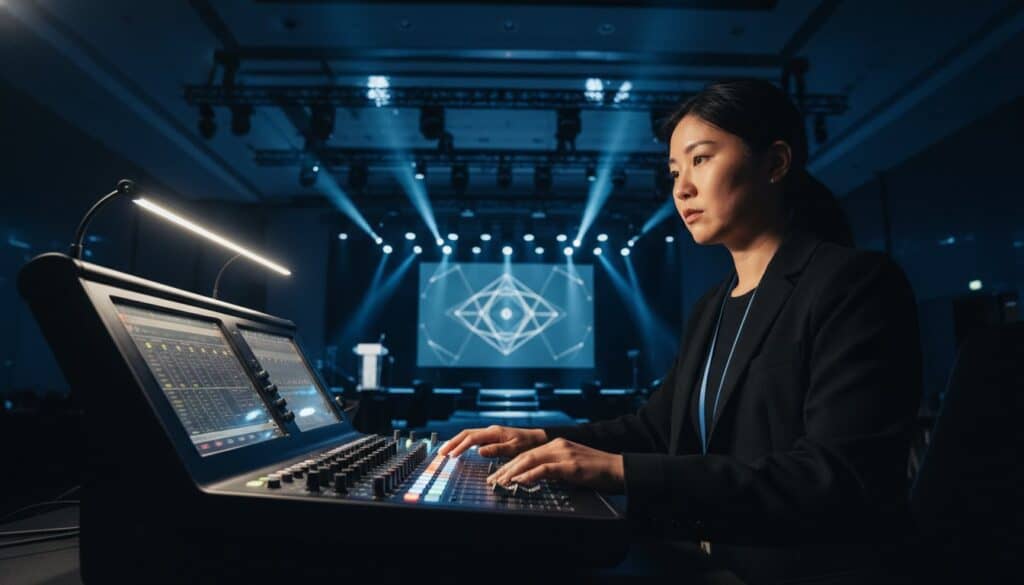
The Essential Components of On-Site Audio Visual Execution
The term “Audio Visual On” isn’t just about flipping a switch. It signifies a state of complete technical readiness, where every piece of audio, video, and lighting equipment works in concert to deliver a clear and reliable experience. This synchronisation is the difference between a simple equipment rental and a fully managed live event production.
Success begins with understanding how these core components function together. Professional audio solutions ensure your message is heard, high-definition video keeps the audience focused, and the right lighting and staging provide the physical canvas for your presentation. It’s a system where each part supports the others to create a cohesive whole.
Audio and Video: The Foundation of Clarity
Of all the technical elements at a live event, sound reinforcement is the most critical. If your audience cannot clearly hear the presenter, the core message is lost, no matter how good the visuals are. Professional audio ensures every word is intelligible, from the front row to the back of the room.
Video production plays a key role in maintaining audience engagement, especially in larger venues or hybrid formats. It provides close-ups, displays presentation content, and ensures everyone has a clear view. This all depends on a stable signal flow—the invisible path that connects a microphone or camera to the audience’s ears and eyes.
Lighting and Staging: Setting the Professional Tone
Lighting does more than just illuminate a room; it directs attention and establishes a professional atmosphere. Thoughtful lighting design can transform a standard conference hall into a focused environment that reinforces your brand’s look and feel without being distracting.
Similarly, scenic stage elements and backdrops provide a clean, professional frame for your speakers. A well-designed stage ensures the focus remains on the presenter and their content, eliminating visual clutter and contributing to the overall quality of the event.
The Role of Technical Direction in Event Reliability
The primary safeguard against on-site failures is not better equipment, but experienced technical direction. A Technical Director (TD) is responsible for the planning, integration, and execution of all technical elements, ensuring every component works as intended when the show goes live.
This “no surprises” approach is built on rigorous pre-show testing and clear communication. For virtual and hybrid events, this oversight is even more critical, as it involves managing both in-person and remote audience experiences simultaneously. We find that open communication between the AV team and the client prevents the vast majority of potential technical issues.
The Technical Director’s Checklist for Success
A proactive plan is the best defence against day-of-show problems. An experienced TD follows a disciplined process to verify every detail before the doors open.
- Conduct a site survey: Before any equipment is loaded in, we assess the venue to identify potential power constraints, acoustic challenges, and logistical hurdles common in Southern Ontario event spaces.
- Establish primary and backup signals: For all critical audio and video feeds, we create redundant signal paths. This ensures that if one connection fails, a backup is instantly available to prevent any interruption.
- Perform a full-scale rehearsal: A complete run-through with all presenters, media, and technical cues is essential. This allows us to resolve any issues and confirm that everyone involved is comfortable and prepared.
Transparency in Production Planning
Effective planning goes beyond a checklist; it requires transparency from the very beginning. Our commitment to all-in, transparent pricing ensures you know exactly what is needed to achieve your goals, with no hidden fees or last-minute additions. This clarity reduces risk by guaranteeing the right team and equipment are in place from day one.
This process is backed by our Comfort Warranty, which guarantees that the technical plan we build together is the one we deliver. Having on-site technicians who understand the purpose of the event—not just how to operate the gear—is fundamental to a successful outcome.
Selecting a Strategic AV Partner in Southern Ontario
When your event is in Cambridge, Kitchener, Waterloo, or the GTA, local expertise is a significant advantage. A partner who understands the region’s venues, labour pools, and logistics can navigate challenges more efficiently than an out-of-town provider.
Choosing a firm with a customized approach also saves costs and reduces complexity. Instead of pushing a standard package, the right partner provides a plan tailored to your specific needs. As a proudly Canadian-owned firm based in Cambridge, we have spent over 30 years helping organizations produce professional events across Southern Ontario. You can see examples of our work with local organizations by viewing our portfolio.
The Value of Proximity: Serving the Ontario Corridor
Having a production partner based in the Waterloo Region offers major logistical advantages for events throughout the Toronto-Windsor corridor. Our central location reduces travel time and costs, allowing for more responsive service whether your event is in London, Hamilton, or downtown Toronto.
This local knowledge extends to specific venues, from the Markham Convention Centre to smaller corporate spaces in Guelph. Understanding a room’s unique power, rigging, and acoustic properties in advance allows for better planning and smoother execution on the day of the show.
Building Trust Beyond a Single Event
A successful event can be the start of a long-term partnership. For many of our clients, the trust built during live productions leads to discussions about improving their own facilities with permanent AV installations.
Ultimately, a flawless event isn’t about the brand of equipment. It’s about the experience and discipline of the team running it. Successful events are built on execution, not just gear.
Frequently Asked Questions
What is the difference between an AV rental and full event production?
An AV rental provides you with the equipment, but you are responsible for its setup, operation, and troubleshooting. Full event production is a comprehensive service where a professional team manages all technical aspects, including design, setup, operation, and on-site direction, to ensure the event runs smoothly.
How much does audio visual production cost for a corporate event in Ontario?
Costs vary widely based on the scale of the event, venue, and specific technical needs (e.g., live streaming, multi-camera setup, complex lighting). A transparent partner will provide a detailed quote with all-in pricing after discussing your event goals, eliminating surprise fees.
Do I need a technical director for a hybrid event?
Yes, a technical director is highly recommended for hybrid events. They are essential for managing the complexities of two audiences—in-person and virtual—and ensuring that the audio and video experience is clear and consistent for everyone, regardless of how they are attending.
How can I ensure there are no technical glitches during my live show?
While no live event is 100% immune to issues, you can minimize risk by working with an experienced production partner. A thorough planning process, site surveys, professional-grade equipment, technical rehearsals, and having on-site technicians are the key steps to preventing most technical problems.