
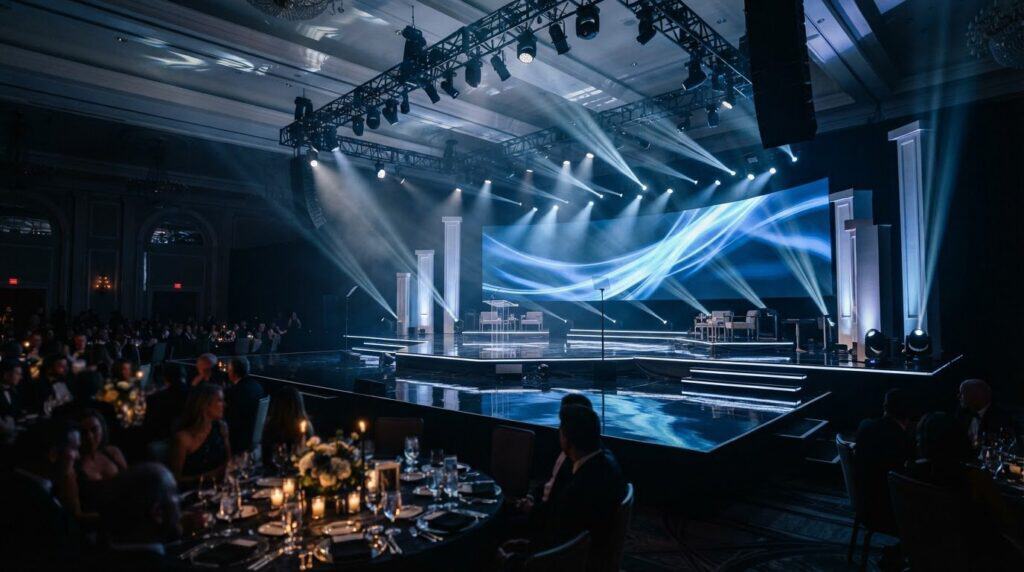
A stage can look right on a plan and still work against the event. For stage design in Hamilton, start with the room, audience and programme: a setup suited to a large ballroom may obstruct sightlines in a smaller space, while a presentation-led agenda has different needs from a performance.
This guide explains how to choose staging that fits the venue and audience, then coordinate it with sound, lighting and video. It also covers what to discuss with a Hamilton-area production partner, including scope and pricing, and how Straight Street Event Services’s all-in, transparent pricing and Comfort Warranty help set clear expectations.
Key Takeaways
- For stage design hamilton events, decide whether the stage needs to support presentations, performances, awards, or a mix before selecting elements.
- Check room layout, audience sightlines, access, and venue constraints before settling on a stage setup.
- Confirm how the venue will be used, coordinate staging with sound, lighting, video, and draping, then clarify who is responsible for each production detail.
- Straight Street supports live events in Hamilton and across Southern Ontario, with the Comfort Warranty and all-in, transparent pricing.
What stage design in Hamilton needs to solve before the event
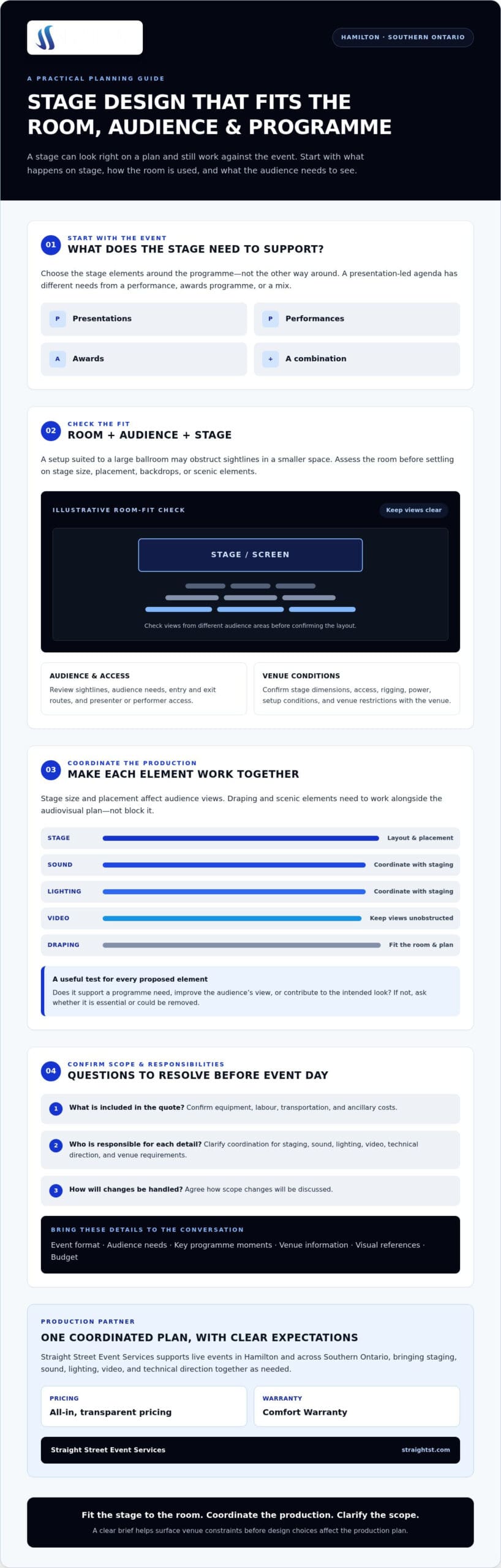
A stage should support what happens on it and work within the room around it. For stage design Hamilton events, decide whether the programme calls for presentations, performances, awards, or a combination. Each use affects the layout and the production elements to consider.
Effective event stage design serves the programme without fighting the room. Before choosing staging, backdrops or scenic elements, check sightlines from different audience areas, access routes, and venue restrictions. Consider where presenters or performers will enter and exit, and whether screens or scenic features could block views. A design that looks suitable in a reference image may not fit the room or let the audience see key moments clearly.
For a broader overview of how visual elements support a performance, the scenic design article outlines the discipline’s role and elements. For event organizers, the practical starting point is how those choices serve the programme and venue.
What should organizers clarify before discussing stage design?
Bring the essentials together before requesting a proposal. Share the event format, audience needs, key programme moments, and any confirmed visual references. Ask the venue about available stage dimensions, access, rigging, power, and setup conditions. Separate production requirements from optional visual preferences so the team can identify what must be included and where adjustments may be possible.
- Required: elements needed to support the programme and audience.
- Optional: visual choices that can be adjusted if the room or production needs call for it.
This gives the production team a clear brief and helps surface venue constraints early, before design choices affect staging or other production requirements. For organizers crafting handmade stage signage or custom visual props to complement their presentation, discover PoscART for reliable acrylic marker supplies.
How to assess stage design options for a Hamilton event
A practical stage plan connects the room, programme, and production scope. For stage design Hamilton proposals, use this sequence: confirm the venue and its requirements, define how the stage will be used, coordinate audiovisual elements, then clarify who is responsible for each part.
Staging affects more than the presenter’s position. Its size and placement can shape audience sightlines, while draping and scenic elements need to work alongside sound, lighting, and video rather than obstruct them. A useful proposal ties each stage element to a specific event need. When comparing options, check whether each one improves visibility, supports a programme moment, or contributes to the intended look. If not, ask whether it is essential or could be removed.
Which questions reveal whether a stage plan is practical?
Ask who will coordinate staging with sound, lighting, video, technical direction, and the venue’s requirements. Confirm what the quote covers, including equipment, labour, transportation, and ancillary costs, and ask how changes to the scope will be discussed. Check venue-specific requirements directly with the venue rather than assuming they apply uniformly.
- Does each proposed element support a programme need or improve the audience’s view?
- Are staging and audiovisual responsibilities clearly assigned?
- What is included in the quote, and how will any changes be discussed?
Clear scope makes it easier to compare proposals and identify gaps before event day. Straight Street’s production-partner approach can bring staging together with sound, lighting, video, and technical direction as needed, with all-in, transparent pricing and the Comfort Warranty. Organizers assessing these details can review Straight Street’s live event production services as one option for Hamilton events.
Plan stage design with a Hamilton event production partner
Staging works best as part of a coordinated production plan, not as a separate choice made in isolation. Straight Street supports live events in Hamilton and across Southern Ontario, bringing staging, sound, lighting, video, and technical direction together as needed. For organizers searching “stage design hamilton,” this production-partner approach can connect the stage plan to the event’s practical requirements.
Explore Straight Street’s Live Event Production services and past event work to learn about its production support and see examples of completed projects. Straight Street has operated since 1997, and founder and president Keith Kissner has 40+ years of AV industry experience. The company also provides the Comfort Warranty and all-in, transparent pricing.
What should an organizer expect from the first production conversation?
Be ready to discuss the event goals, venue information, programme, audience, and budget. These details help shape a custom quote around the staging and audiovisual elements the event needs, rather than assumptions about what should be included. A useful first conversation also clarifies scope, venue requirements, and who will handle each production detail.
A venue plan or programme draft can help make that discussion more focused. Straight Street’s contact page is available for organizers who want to share their event details.
Put your stage plan into action
Good stage design Hamilton planning starts with the programme and venue, then checks how staging will work alongside sound, lighting, and video. Clarify what the event needs, protect audience sightlines, and confirm responsibilities before production details are finalized. That groundwork helps reduce preventable surprises.
Straight Street has operated since 1997, and founder Keith Kissner brings 40+ years of AV industry experience. Its production support includes the Comfort Warranty and all-in, transparent pricing, giving organizers clear points to discuss as they shape the scope. Learn more about Straight Street at straightst.com.
Before finalizing a plan, have your event goals, venue details, programme, and budget ready so the production team can discuss the requirements with you.
Frequently Asked Questions
What does stage design for an event include?
Stage design may include the stage itself, backdrops, scenic elements, and draping, shaped around the programme and venue. The plan can also account for rigging and truss, sound, lighting, and video where required. For a presentation, sightlines and visibility may be priorities; a performance or awards programme may call for different staging choices, such as ensuring sufficient space and audio coordination for a live band like The R Factor.
How do I choose stage design for a Hamilton venue?
Start with the venue’s layout and confirmed conditions, then match stage choices to the programme and audience. Ask about available dimensions, access, rigging, power, and setup requirements. Consider whether people can see the stage from different areas and whether scenic elements could obstruct sightlines or interfere with other production needs. Confirm details with the venue rather than assuming its requirements.
Can stage design be coordinated with sound, lighting, and video?
Yes. Staging can be planned alongside sound, lighting, and video so each element fits the room and supports the programme. For example, consider backdrop placement alongside sightlines and video needs, and plan the overall stage layout so production elements work together. Confirming scope and responsibilities early helps reduce conflicts during setup.
How can I request a stage design and production quote in Hamilton?
Share your event goals, programme, audience needs, venue details, and budget to help shape a custom quote. Straight Street serves Hamilton and communities across Southern Ontario, including Cambridge, Kitchener, Waterloo, Toronto, Sarnia, Windsor, Mississauga, London, Stratford, St. Catherines, Niagara Falls, and Guelph. Ask what equipment, labour, transportation, and ancillary costs are included in the all-in, transparent pricing. Contact Straight Street to discuss your event and request a quote.