
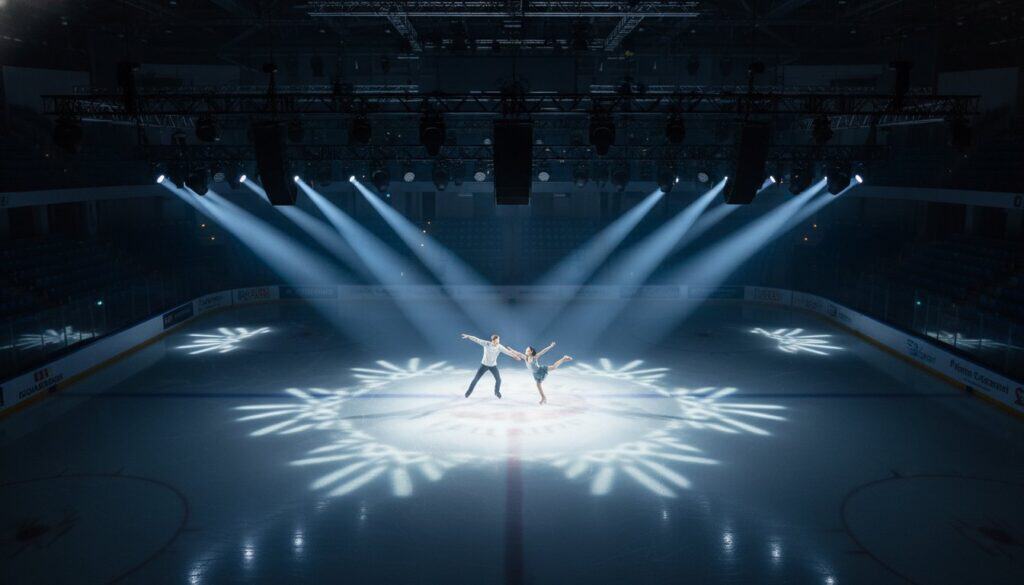
Producing an ice show in a community arena presents unique audiovisual challenges that standard event setups cannot handle. The combination of cold temperatures, reflective surfaces, and cavernous acoustics requires a specialized approach to ensure the show is seen and heard clearly by everyone, from the back row to the skaters on the ice.
The Unique Technical Challenges of Ice Show AV Rental
An ice rink is one of the most difficult environments for audiovisual production. The physics of the space work against standard equipment, creating problems with sound, light, and gear reliability. Understanding these challenges is the first step in planning a successful show.
- Acoustic Management: High ceilings and hard, reflective surfaces (ice, boards, glass) cause sound to bounce uncontrollably. A standard PA system results in a wall of unintelligible echo, making music muddy and announcements impossible to understand.
- The Physics of Ice: The ice surface is a massive, white reflector. Poorly planned lighting can create dangerous glare for skaters, wash out costumes, and make it difficult for the audience to see the performance.
- Temperature Resilience: Near-freezing temperatures and condensation can cause sensitive audiovisual gear like mixing consoles, projectors, and LED panels to fail unexpectedly. Equipment must be chosen and managed for reliability in the cold.
- Power and Rigging: Many municipal arenas lack the dedicated power distribution and structural rigging points needed for professional production. Safely installing overhead trussing and running power requires careful logistical planning.
Navigating Arena Acoustics
The most common audio problem in an ice rink is the “slap-back” echo, where sound reflects off the far walls and returns as a delayed, garbled copy of the original. To counter this, we use directional speaker arrays and a distributed sound system. Instead of a single, loud source at one end of the rink, multiple smaller speakers are placed strategically to cover specific seating sections.
This approach delivers clear, direct sound to the audience without blasting the arena with excessive volume that would only create more echo. It ensures that music has impact and every announcement is understood.
Thermal Considerations for AV Gear
Professional AV equipment generates heat, which creates a risk of condensation when brought into a cold, damp arena. This moisture can short out sensitive electronics in LED video walls and digital consoles. An experienced technical team knows how to acclimate gear to the environment and take protective measures to prevent moisture-related failures.
When environmental factors are this volatile, the experience of the technicians managing the gear is just as important as the equipment itself. This is a key part of our Comfort Warranty—we plan for these issues so you don’t have to worry about them.
Designing for the Arena: Audio, Lighting, and Visuals
Effective AV design for an ice show is about control and clarity. The goal is to direct the audience’s attention, support the skaters’ performance, and create a professional atmosphere that feels distinct from a regular hockey game. This requires integrating audio, lighting, and video into a single, cohesive plan.
- Purposeful Lighting: Using tools like follow spots and controlled wash lighting helps define the performance space on the vast ice surface and guide the audience’s focus.
- Audio Clarity: The system must be designed with two distinct audiences in mind: the spectators in the stands and the skaters on the ice, who need to hear their musical cues clearly to perform.
- Integrated Video: LED video walls or projection can provide dynamic backdrops and visual context, transforming a bare-bones arena into a proper performance venue.
- Technical Direction: A technical director is essential for synchronizing all the AV cues—lighting changes, sound effects, video clips—with the live choreography for a polished, professional show.
Lighting for Clarity and Atmosphere
Lighting an ice show involves balancing two needs: functional visibility and atmospheric design. First, skaters must be properly and safely lit without creating glare that could impair their performance. This is achieved with carefully angled fixtures and controlled brightness.
Second, lighting is used to create mood and focus attention, guiding the audience’s eyes through complex choreography. This is the difference between simply turning on the overhead lights and designing a true visual experience.
Audio as the Pulse of the Show
Skaters rely entirely on their music for timing. In a loud, echoing arena, they can easily lose their place if they can’t hear the music clearly. To solve this, we provide dedicated on-ice monitors—speakers pointed directly at the ice surface—giving performers the clean audio feed they need to stay in sync.
This is just one component of a comprehensive live event production plan that ensures the technical details support, rather than hinder, the performance.
Execution Without Surprises: The Straight Street Approach
For over 30 years, we have provided audiovisual production for events across Southern Ontario. Our process is built on thorough pre-production planning to reduce risk and ensure there are no unexpected issues on show day. We believe in clear communication and transparent partnerships with the clubs and organizations we work with.
- The “No Surprises” Philosophy: We achieve reliability through meticulous planning. Our all-in, transparent pricing means the quote you approve is the price you pay, with no hidden fees or last-minute additions.
- Local Expertise in Southern Ontario: We understand the technical specifications and logistical challenges of arenas from Cambridge and Kitchener-Waterloo to Toronto, Hamilton, and the Niagara region.
- Transparency and Trust: We build partnerships by recommending the right equipment for the job, not the most expensive. Our goal is to find the most effective solution for your specific venue and budget.
- The Human Element: A successful show comes from a technical partner who understands the performance goals. We work to support the core vision of your show, ensuring the technology serves the performers.
Southern Ontario Local Advantage
Our extensive experience in Southern Ontario means we are likely already familiar with your venue. This local knowledge saves valuable time in the planning phase and helps us anticipate potential logistical hurdles with power, rigging, and load-in. You can see examples of our work in the region in our portfolio.
Explore our work to see how we’ve handled technical production for a wide range of local events.
Planning for Success
To help us prepare the most accurate plan, it’s helpful to provide your AV partner with a few key details upfront. A simple checklist can get the conversation started:
- The dimensions of the arena and ice surface.
- Information on available electrical power.
- A schedule of the show with major script or music cues.
- Your primary goals for the show’s look and feel.
Choosing a partner with proven experience in the unique environment of an ice rink is the most important step. A team that understands the physics of the space can deliver a clean, professional, and reliable production that allows your skaters to shine.
Frequently Asked Questions
What is the most important factor in choosing an ice show AV rental partner?
Experience. Look for a partner who can demonstrate specific experience working in ice arenas. They will understand the unique challenges of acoustics, temperature, and light reflection and will have proven strategies to manage them.
How do you prevent audio echo in a large ice arena?
Through a distributed audio system design. Instead of one loud sound source, multiple speakers are aimed at specific zones. This provides clear, direct sound to the audience and skaters without creating the excessive reverberation that causes echo.
Can professional LED video walls be used in the cold environment of a rink?
Yes, but they require careful management. An experienced technical team will acclimate the gear to the cold slowly to prevent condensation from forming inside the electronics. They will also use equipment rated for operation in lower temperatures.
Why is technical direction necessary for a local skating club show?
A technical director acts as the conductor for all the AV elements. They follow the show’s script and cue the lighting, sound, and video operators at the precise moments, ensuring all technical components are synchronized with the live performance for a seamless and professional presentation.