
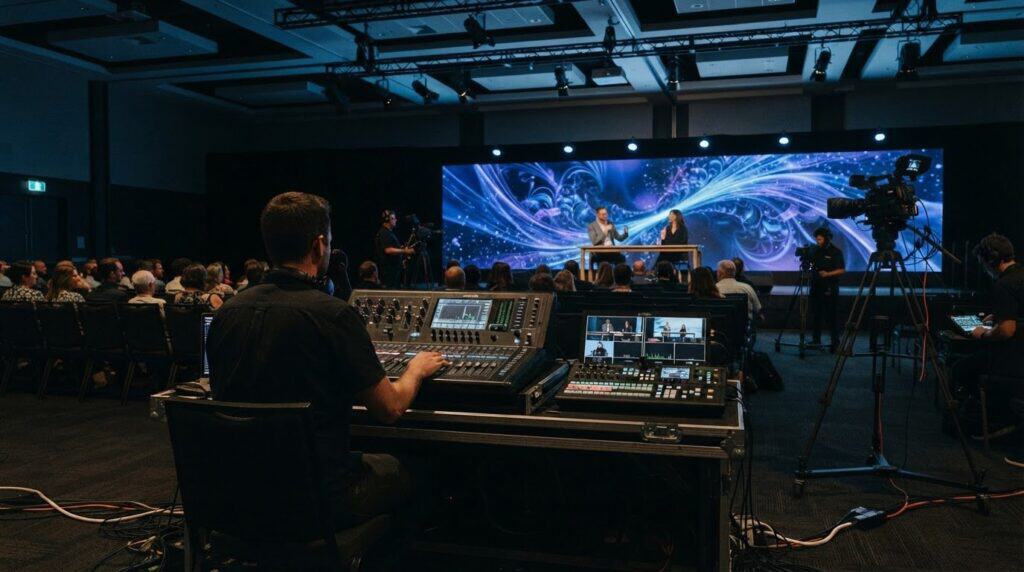
Choosing an AV production partner by equipment list alone can leave gaps between the stage, the audience and the program. A well-planned setup brings together sound for clear speech and playback, lighting and staging suited to the room, and video for presentations or streaming when needed. The right combination depends on the event format, from presentations and panels to live performances and audience questions.
Key Takeaways
- Match sound and lighting systems to the event, venue and audience.
- Choose microphones and sound reinforcement around the speakers, audience interaction and room.
- Plan lighting, staging and video together so people and content are visible across the space.
- Look for a production partner that coordinates the event and explains the Comfort Warranty and all-in, transparent pricing.
Live event cameras and livestreaming
Livestreaming a live event takes more than a camera pointed at the stage. Camera positions, sound feeds and the streaming platform need to work together for people in the room and those watching remotely.
Camera and Livestreaming Services
For presentations, performances and panels, PTZ cameras can follow speakers and provide different views for the stream. An encoder or capture card sends the camera feed online, and the setup should work with the chosen platform, such as Zoom, Microsoft Teams or Webex. At a festival or other multi-area event, plan coverage around the program and the moments remote participants need to see. Focused camera views provide useful detail without distracting from the live event.
Accessibility matters in the stream as well as in the room. Plan readable slides, clear views of speakers and audience questions that remote participants can hear. If the event includes captions, decide how they will appear and test their display before the program begins.
Venue AV and Provider Choices
In-house venue AV may include installed sound and lighting systems, other equipment and venue staff. An external AV production partner can coordinate cameras, livestreaming and other production elements across the event. The right approach depends on the venue’s systems, the event’s needs and who is responsible for each task. Define those responsibilities before production begins to prevent gaps.
In Canada, confirm the venue’s requirements for load-in access, equipment placement, rigging approval, power, network access and use of house AV. Requirements vary by venue, so clarify which systems are available and what approvals apply. For rentals, establish how equipment will connect to the venue’s systems and internet service.
Plan the signal path and program
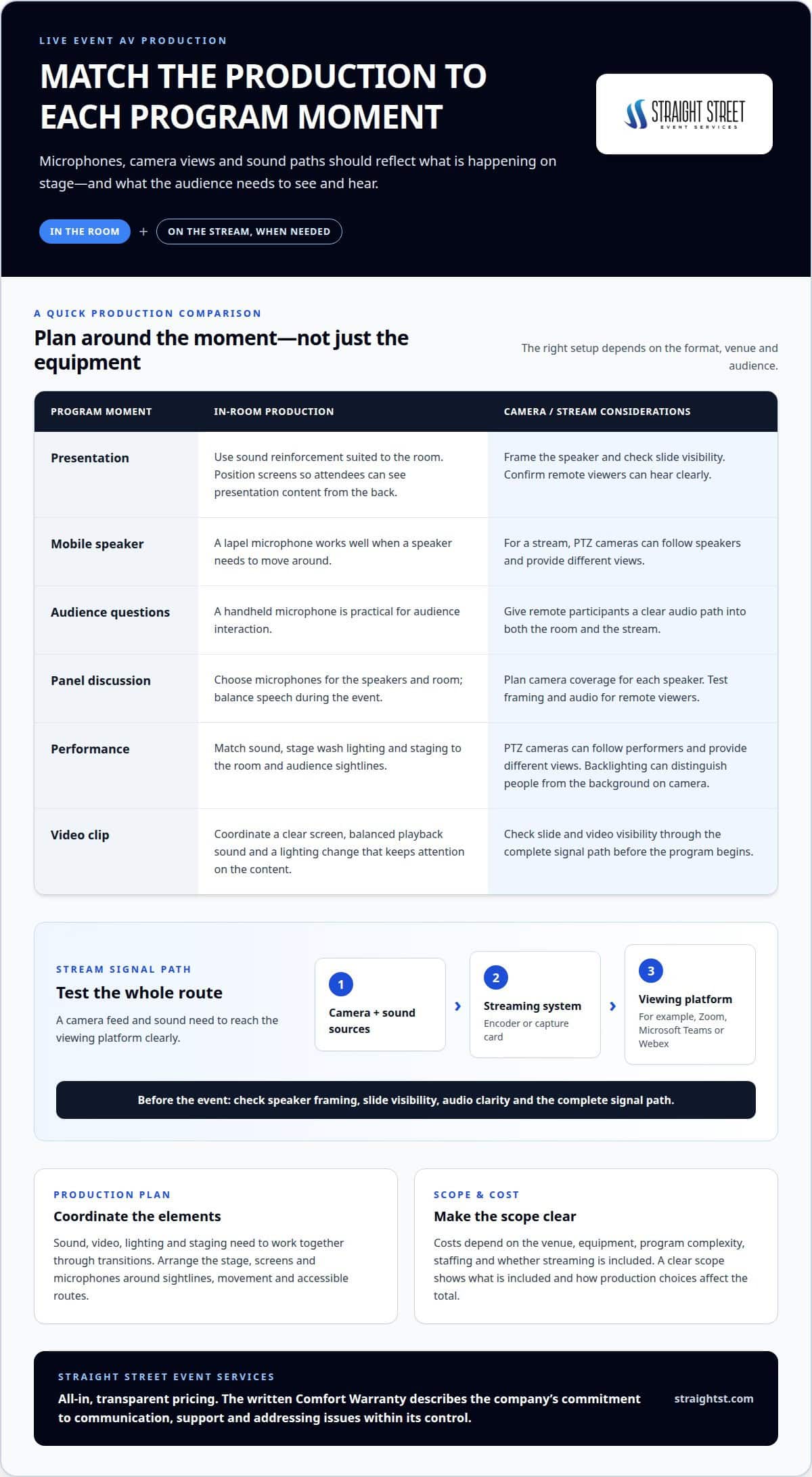
Start with the program: identify which parts need streaming, who will speak or perform and how remote participants will take part. Match camera views and microphones to those moments, then confirm that the platform supports the planned interaction. A panel, for example, needs camera coverage of each speaker, while remote questions need a clear audio path into both the room and the stream.
Before the event, test the complete signal path from camera and sound sources through the streaming system to the viewing platform. Check slide visibility, speaker framing and whether remote viewers can hear clearly. Testing catches connection and routing issues before participants join.
Live event audio, video, lighting and staging
Live event AV production brings together sound, video, lighting, staging and technical direction. The production plan should support the event’s purpose, audience sightlines and smooth transitions between program segments.
Live Event Audio and Video
Choose microphones to suit each format: lapel microphones work well for mobile speakers, while handheld microphones are practical for audience questions. Technicians use a digital mixer to balance speech and video audio during the event. Match speakers to the room, and position screens so attendees can see the content from the back.
Lighting and Stage Production
Stage wash lighting helps performers and speakers remain visible, while backlighting can distinguish them from the background on camera. Staging, drapery and décor should frame the activity without blocking sightlines. Venue approvals and rigging plans determine where lighting and scenic elements can be placed.
Event Technology Components
Audio, video and lighting must work together through every transition. A video clip, for example, needs a clear screen, balanced sound and a lighting change that keeps attention on the content. Technical direction coordinates these elements for live performances, corporate events and trade shows.
Live Event Staging and Layout
Arrange the stage, screens and microphones around audience sightlines and movement through the room. Consider performers, speakers, equipment positions and accessible routes before finalizing staging and décor. The layout should also allow the production team to manage cues and transitions.
Production Company Selection
In Canada, choose a production company that can coordinate sound, video, lighting, staging and technical direction, not just supply equipment. Look for clear communication about venue requirements, responsibilities and the run of show. A coordinated production plan supports the event from setup through strike.
Pricing Factors and Costs
There is no single price for every live event. Costs depend on the venue, equipment, program complexity, staffing and whether the event includes streaming. A clear scope shows what is included and helps organizers understand how production choices affect the total.
Production Risks and Backup Plans
Common risks include failed cables or adapters, audio interruptions and a missed transition. Keep spare cables, power strips and adapters available, test the full signal path, and assign responsibility for each cue. For coordinated full-program audiovisual production, align technical checks with the event schedule.
Straight Street Event Services
Straight Street Event Services helps conference organizers coordinate production around the program, venue and audience. Its live event and hybrid event production services support the technical needs of in-person and virtual sessions.
Audio and video production can be tailored to the event format, from presentations to panel discussions. Straight Street communicates production requirements and flags potential issues early, so organizers can make informed decisions and keep responsibilities clear.
Straight Street supports events in Cambridge, Kitchener, Waterloo, Toronto, Sarnia, Windsor, Mississauga, Hamilton, London, Stratford, Southern Ontario, St. Catherines, Niagara Falls and Guelph, helping coordinate production with the venue and event team.
Straight Street provides all-in, transparent pricing. The written Comfort Warranty describes the company’s commitment to communication, support and addressing issues within its control.
To discuss your conference requirements, contact Straight Street Event Services.
Set the Production Plan in Motion
Before production begins, designate one person to gather event updates and internal approvals. A single point of contact helps prevent conflicting instructions about file versions, timing changes and decisions. It also gives the production team a clear route for receiving information that affects sound, lighting, staging and video.
For live event production, this simple handoff clarifies the working relationship from the start. Agree on who shares final files, who approves changes and who communicates updates during the event. With responsibilities understood, the production team can carry out the approved plan while organizers stay involved in key decisions.
To discuss your event requirements, contact Straight Street Event Services. Start with a clear point of contact, and move forward with confidence.
Frequently Asked Questions
What AV production does a live event need?
A live event needs sound, lighting, staging and video planned around its program and venue, not a fixed package. Review what each part of the event requires, then compare those needs with the venue’s existing systems. Confirm who supplies each item and how the components connect. This helps identify gaps before the production plan is finalized.
How do you plan sound and lighting for a live event?
Start with the program, venue and audience. Note where microphones, playback and other sound sources are needed, along with the lighting required for each part of the event. Share these details with the production team so they can plan connections, placement and tests before the audience arrives.
How far in advance should live event AV production be booked?
Book as soon as the event date is firm. Early coordination gives the team time to align production with the venue, program and schedule, and address access or existing system requirements. If the date is approaching, share confirmed details promptly so the scope can be planned around the available time. Straight Street provides all-in, transparent pricing and a Comfort Warranty.