
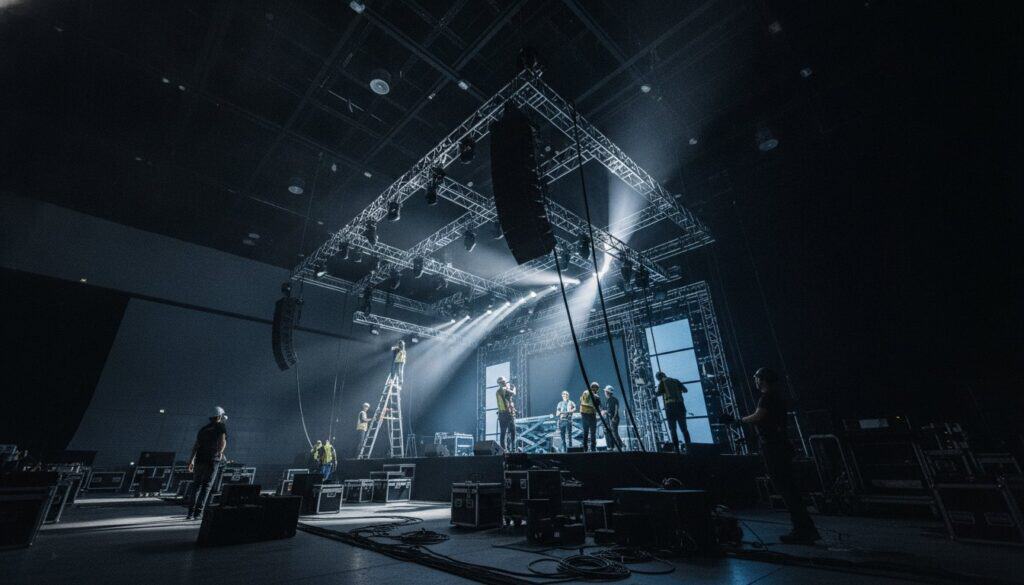
An improperly planned stage can lead to poor sightlines, audio feedback, and technical issues that undermine your entire event. A professional stage is about more than just looks; it is a functional platform built to support clear communication with your audience.
Defining Stage Requirements for Your Event
Effective Event Stage Design begins with your goals and your venue. A stage for a corporate conference in Toronto has different needs than one for a Press Conferences and Media Events setup in Kitchener, from power requirements to audience sightlines. Before choosing materials, analyze the venue’s physical characteristics, like ceiling height and floor space, to determine the appropriate stage size.
The final setup must provide enough room for presenters, furniture, and any required production equipment. Most importantly, it must allow for a clear, unobstructed view for every person in the audience, ensuring your message is seen and heard as intended.
Integrating Technical Production Elements
A stage is only useful if the audience can clearly see and hear the presenters. Professional audio solutions ensure every word is heard throughout the centre, while strategic lighting focuses attention without creating distracting glare for video recording or the live audience. The lighting colours and design should align with your brand without overpowering the presentation.
Video elements like LED walls or projection screens must be integrated correctly to support presentations for both in-person and hybrid viewers. All overhead equipment requires safe rigging and truss systems, planned and executed by an experienced technical team to prevent accidents and ensure a reliable production.
Planning for a Predictable Outcome
To avoid financial surprises, your production partner should provide all-in, transparent pricing that includes all equipment, labour, and transportation costs. A detailed pre-production plan and a venue walkthrough are essential to identify potential risks before they become costly problems on the day of the event.
Working with a partner who provides technical direction and a written promise like the Comfort Warranty ensures a single point of contact is managing the crew and schedule. This approach to Event Stage Design provides peace of mind and a direct line for immediate assistance if any on-site issues arise.
Ultimately, a successful stage is built on a foundation of clear goals, technical competence, and transparent planning. By focusing on these core elements, you can ensure your stage supports your message and provides a reliable platform for your presenters.