
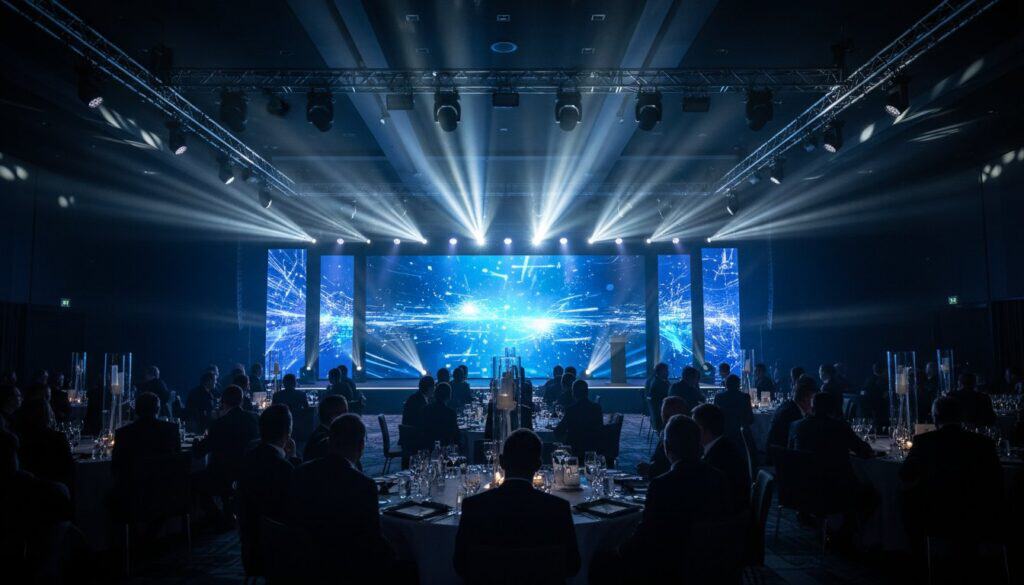
The success of a corporate event often depends on flawless technical execution. When audiovisual planning is treated as an afterthought, organizers risk facing technical failures that can disrupt key moments, undermine their message, and lead to unexpected costs. Proper planning isn’t just about renting equipment; it’s about developing a technical strategy that aligns with your goals and anticipates challenges before they happen.
This guide provides a practical framework for event producers and corporate organizers in Southern Ontario. We will cover the foundational steps of AV planning, from site audits to choosing the right technical partner, ensuring your event runs smoothly and on budget.
The Technical Foundation: Audiovisual Planning for Southern Ontario Venues
Effective audiovisual planning is the strategic process of aligning an event’s technical infrastructure with its core objectives. It moves beyond a simple gear list to create a comprehensive plan that accounts for the venue, audience, and content. The process begins long before any equipment arrives, with a detailed technical audit specific to the event’s location.
For organizers working in Southern Ontario, local expertise is critical. Navigating the unique logistical challenges of venues from downtown Toronto to the Windsor corridor requires firsthand experience. Clear communication and a thorough understanding of the technical requirements in the planning phase are the best ways to prevent costly day-of failures.
Venue Audits in the Toronto-Waterloo Corridor
Every venue presents a unique set of technical considerations that a generic plan will miss. A professional technical partner conducts a detailed site visit to identify and solve potential issues ahead of time.
- Power and Logistics: Heritage spaces in Cambridge, Galt, or Stratford often have limited or outdated power infrastructure. A technical audit assesses power availability and distribution requirements to prevent overloads. It also maps out load-in and load-out routes, which can be complex in older buildings or busy urban centres.
- Acoustics and Sightlines: The high ceilings and glass walls of a modern Toronto convention centre create distinct acoustic challenges. An audit helps determine the correct type and placement of speakers for clear audio. It also confirms sightlines to ensure every attendee has an unobstructed view of the stage and screens.
- Network Stability: For hybrid events, reliable internet is non-negotiable. A site check involves verifying network stability and bandwidth, especially in regional hubs like Guelph or London. This ensures a high-quality, uninterrupted experience for your virtual audience.
The Risk of Generic Planning vs. Technical Direction
Simply renting a standard package of AV gear often fails to account for the specific needs of a live environment. A list of equipment doesn’t consider signal flow, latency, or how different components will interact within the space. This is where professional technical direction becomes essential.
A technical director acts as the bridge between your event vision and the on-the-ground execution. They are responsible for designing the entire technical system, managing the crew, and ensuring every piece of equipment works together as intended. This level of oversight is the most effective safeguard against the technical surprises that can derail a live event.
A Strategic Guide to Technical Solutions
Once the foundation is set, the next step is selecting the right technical components. A professional AV package includes audio, video, lighting, and staging, all chosen to support the event’s goals. The focus should be on the impact and reliability of the solutions, not just the rental price.
For hybrid events, this process is even more critical. The technical plan must ensure that virtual attendees feel just as connected and engaged as those in the room. This requires a thoughtful approach to camera placement, audio mixing for broadcast, and interactive platform integration.
Audio and Video: Ensuring Clarity and Connection
The core of any event’s message is delivered through audio and video. The goal is to achieve absolute clarity for every attendee, whether they are in the front row or watching from home.
- Audio Solutions: In a large hall or conference centre, the right audio system ensures every word is intelligible. This involves selecting appropriate microphones for presenters, distributing speakers for even coverage, and managing acoustics to prevent echo or feedback.
- Video Solutions: High-definition video is now standard for corporate events. This includes crisp projection for on-site presentations and reliable, high-quality webcasting for hybrid audiences. Proper planning also accounts for signal routing to prevent delays or glitches on screen.
Lighting and Staging: Directing Focus and Setting the Scene
Lighting and staging work together to create a professional and engaging environment. They guide the audience’s attention and establish a clear focal point for the presentation.
- Lighting Solutions: Professional lighting does more than just illuminate the stage. It can be used to feature key speakers, highlight corporate branding, and create a specific mood that complements the event’s tone.
- Staging and Scenic Elements: The stage is the physical foundation of your event. A well-designed stage provides a clean, professional backdrop that supports the presenter without causing a distraction. Integrating staging and scenic elements helps transform a simple presentation into a polished production.
Executing the Plan: From Pre-Production to Live Event
With a solid plan in place, the focus shifts to execution. This transition is where a reliable production partner demonstrates their value. The work done during the planning phase ensures that the on-site setup is efficient and that the technical team is prepared for the live event.
The presence of experienced on-site technicians is crucial for maintaining a “no surprises” environment. They manage the live production, make real-time adjustments as needed, and are the first line of defence against any unforeseen issues. Building a relationship with a production partner based on trust and transparency reduces both risk and the total investment required for a successful event.
The Role of On-Site Technical Direction
During a live event, the technical director and their crew manage all audiovisual elements. They ensure sound levels are perfect, visual cues are timed correctly, and presentations run smoothly. For hybrid setups, they are also responsible for managing the seamless transition between live speakers and virtual presenters, ensuring a cohesive experience for all attendees.
Transparency as a Tool for Success
Hidden fees and last-minute charges are a major source of anxiety for event planners. A trustworthy AV partner eliminates this concern through clear and detailed proposals. For planners working on events in Hamilton or Niagara Falls, knowing the full cost upfront provides peace of mind.
At Straight Street, our all-in, transparent pricing ensures you have a complete understanding of the investment from the start. This approach is backed by our Comfort Warranty, which guarantees you get the right equipment and skilled labour to make your event a success. We believe in building collaborative partnerships, not just completing transactions. To see these principles in action, we invite you to contact Straight Street today to start planning your technical needs.
Frequently Asked Questions
What is the difference between an event planner and an audiovisual production partner?
An event planner manages the overall logistics of an event, including venue, catering, and registration. An audiovisual production partner, like Straight Street, focuses exclusively on the technical execution. We design, supply, and operate the audio, video, lighting, and staging systems required to bring the event planner’s vision to life.
How far in advance should I start audiovisual planning for a corporate event in Toronto?
For a large corporate event, we recommend starting the audiovisual planning process 3-6 months in advance. This allows ample time for site visits, system design, and securing the necessary equipment and crew, especially for events in high-demand locations like Toronto.
Do I need to rent different equipment for a hybrid event compared to a strictly live one?
Yes. A hybrid event requires additional equipment to serve the virtual audience, including broadcast-quality cameras, video switchers, encoding hardware for streaming, and a separate audio mix for the online feed. A successful hybrid event requires a technical plan that treats the online audience as equal participants.
What are the most common technical failures in live event production, and how can they be avoided?
The most common failures include microphone feedback or dropouts, presentation video glitches, and unstable internet for streaming. These are almost always avoided with thorough pre-production, including a technical site audit, professional-grade equipment, and having experienced on-site technicians who can anticipate and resolve issues before they become problems.