
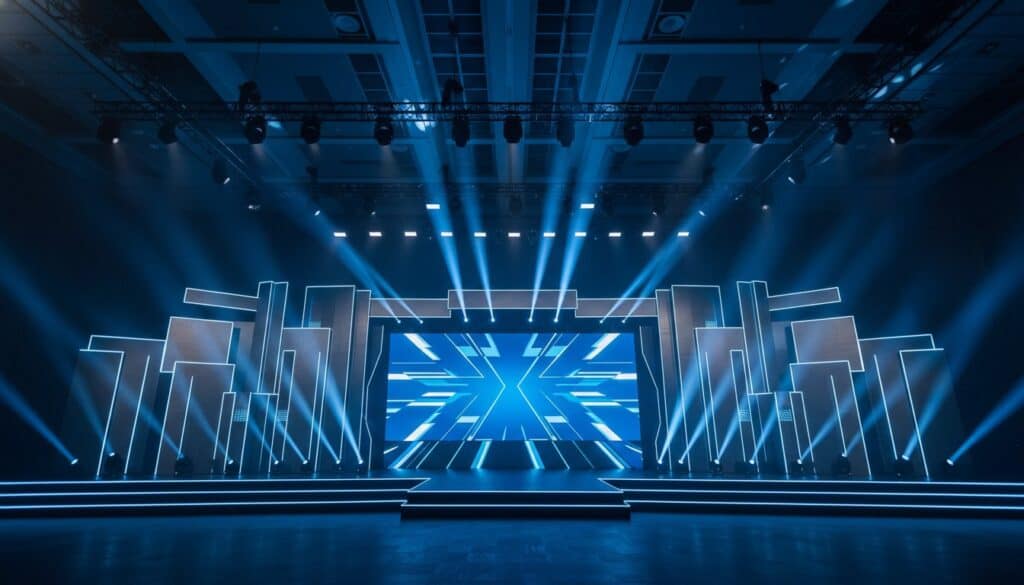
A generic stage setup with a simple podium and screen can make it difficult to hold an audience’s attention, causing your message to get lost. To create a truly professional environment, the physical and technical elements of your stage must work together. This requires moving beyond basic decoration and focusing on an integrated production approach where scenic design, lighting, and video are planned as a single, cohesive system.
Here’s a practical guide for event planners and corporate organizers in Southern Ontario on how to use stage elements to create a more effective and memorable presentation.
Scenic Stage Elements: The Foundation of a Professional Event
The first impression an audience has of your event is often the stage itself. Professional scenic design establishes credibility and sets the tone before a speaker even says a word. It’s about creating a controlled environment that supports your message, looks polished on camera, and provides a clear focal point for the audience.
- Credibility and Tone: Thoughtful scenic design shows a commitment to quality and detail.
- Depth and Texture: Moving beyond a flat backdrop creates a more dynamic and visually engaging space.
- Integrated Approach: Treating the stage as a complete system ensures all elements—physical and digital—work together.
- Clear Planning: Finalizing the design well before load-in prevents expensive, last-minute changes on site.
The Impact of Custom Backdrops and Textures
The backdrop is the visual anchor of your stage. The choice between materials has a significant impact on how lighting behaves and how your branding is presented. Hard-panel sets, for instance, offer clean lines and precise control over light and shadow, making them ideal for corporate events that will be filmed.
Soft goods like drapery can add texture and softness, but require careful lighting to look their best. Integrating brand colours through physical materials rather than relying solely on digital projection creates a more tangible and high-quality feel. For examples of how these elements come together, you can see some of our past live event production work.
Creating Depth and Focus with Layered Elements
A flat stage can feel uninspired, both for the live audience and for those watching on a screen. We approach this by creating layers—a foreground, midground, and background—to add visual depth. This could involve placing branded elements or monitors in the foreground, positioning the speaker in the midground, and using a textured backdrop to complete the scene.
This method is particularly effective in large Southern Ontario venues, like the ballrooms in Toronto or Hamilton, where a layered design helps draw the audience’s eye to the main presentation area. It ensures the stage looks intentional and professional from every angle, which is critical for hybrid events where the camera view is just as important as the live one.
Integrating Lighting and Video for Clarity and Impact
Lighting and video are not just add-ons; they are essential components that must be integrated with the physical stage design from the beginning. When planned correctly, they guide audience focus, reinforce key messages, and ensure the entire presentation is clear and visible. The goal is to create a cohesive look where technology supports the physical environment, rather than competing with it.
Strategic Lighting for Focus and Atmosphere
Effective lighting is about more than just brightness; it’s about balance and intention. For hybrid audiences, lighting must be balanced for both the in-person view and the camera, which often have different requirements. A stage that looks great in the room might appear washed out or poorly lit on a livestream if not planned correctly.
Using a combination of wash lights for general illumination and accent lights to highlight specific scenic textures or branding elements adds dimension. This intentional approach directs the audience’s attention where you want it and contributes to a professional atmosphere. You can learn more about how we apply these principles in our work on corporate event stage design in Ontario.
Video Solutions that Complement Staging
When incorporating video, the primary decision is often between projection mapping and LED walls. The best choice depends on venue constraints, ambient light, and budget. In a bright convention centre in Cambridge or a venue in London with large windows, an LED wall will provide the necessary brightness and clarity that a projector might struggle with.
Regardless of the technology, the video content must be designed to complement the physical stage elements, not overpower them. This requires close collaboration between the content creators and the production team to ensure colours, branding, and motion graphics align with the overall look of the stage.
Technical Execution: Bringing the Vision to Life in Southern Ontario
A great design is only effective if it can be executed flawlessly on event day. This is where a trusted production partner with local expertise becomes invaluable. Proper planning, technical rehearsals, and clear communication are the keys to a smooth load-in and a stress-free event.
Our process is built on a “no surprises” approach, which is why we provide all-in, transparent pricing and our Comfort Warranty. This ensures you know exactly what to expect from day one.
Planning for Success in Local Venues
Every venue in Southern Ontario has its own logistical challenges, from power and rigging limitations in historic buildings to loading dock access at modern convention centres. An experienced local team understands these nuances, whether working in a Toronto hotel or a Waterloo tech hub. This knowledge helps anticipate and solve problems before they can impact your event.
Clear communication between the event planner and the production team is essential. A technical audit of your chosen venue can identify potential issues early on, ensuring everything is in place for a successful show. If you have questions about a specific venue, feel free to contact our team for guidance.
The Final Takeaway for Memorable Events
Creating a memorable event stage is not about adding more decoration; it’s about thoughtful, integrated production. By treating scenic, lighting, and video elements as one cohesive system, you build a professional environment that supports your message and holds your audience’s attention.
Working with a reliable audiovisual partner who understands the technical and logistical realities of producing events in Southern Ontario reduces risk and ensures your vision is executed correctly. The right planning and the right team are the most important elements of all.
Frequently Asked Questions
What are the most important stage elements for a corporate event?
For most corporate events, the key elements are a professional backdrop that incorporates branding, balanced lighting that works for both in-person and camera audiences, and clear audio. Adding dimensional elements like layered panels or screens can further improve the visual presentation.
How does scenic design differ from simple stage decoration?
Stage decoration is about adding aesthetic items, like flowers or banners, to an existing space. Scenic design is a more comprehensive approach that involves creating a purpose-built environment, considering how lighting, video, and physical structures work together to support the event’s goals and create a specific look and feel.
How do I choose a stage production partner in Toronto or Cambridge?
Look for a partner with a strong portfolio of work in venues similar to yours and a deep understanding of the technical requirements for your type of event. Prioritize clear communication, transparent pricing, and local expertise, as these factors are critical for preventing day-of issues. A good partner acts as an extension of your team, focused on solutions.
Can professional stage elements be adapted for virtual or hybrid events?
Absolutely. For virtual and hybrid events, the stage becomes a studio set. The principles of layering, texture, and integrated lighting are even more important, as the camera is less forgiving than the human eye. Elements like LED walls and professional backdrops are highly effective for creating a polished broadcast look that keeps remote attendees engaged.