
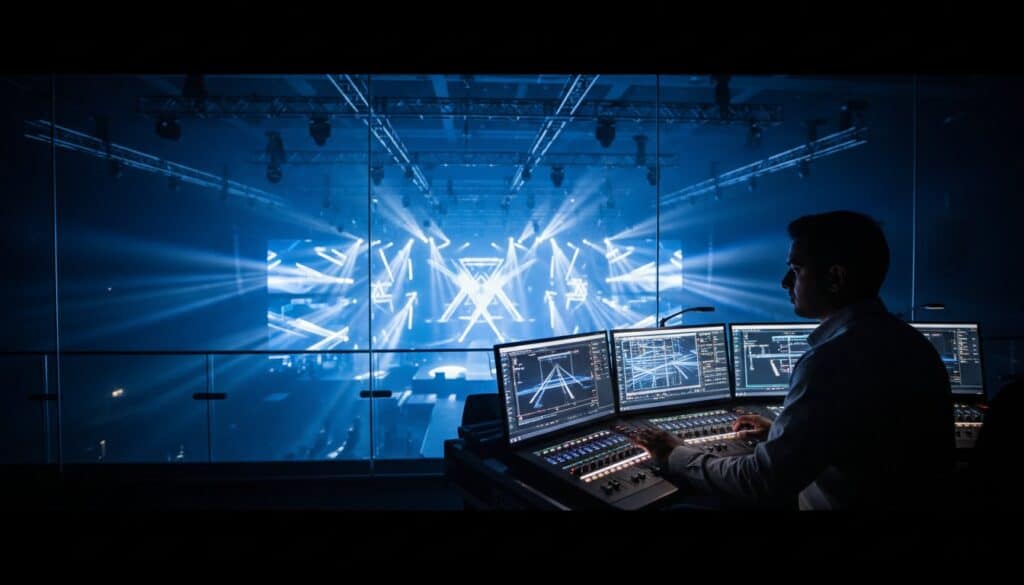
A successful live event feels effortless to the audience, but that quiet confidence is usually maintained by a technical director working through a complex web of logistics behind the scenes. The fear of a screen failing or a microphone cutting out during a keynote creates a tension that can distract you from your actual message. It’s difficult to focus on your presentation when you’re worried about equipment compatibility or whether the AV crew truly understands the run-of-show.
We know the weight of that responsibility and the frustration of dealing with hidden labour costs that often appear long after the event ends. This guide explains how a technical director acts as the single point of accountability to manage crew, gear, and timing so your production stays on track. You’ll learn how our Comfort Warranty and all-in, transparent pricing provide the certainty you need to focus on your audience instead of your equipment. We will explore the specific ways this role reduces technical risk for hybrid and live events across Southern Ontario, from the Kitchener-Waterloo tech hub to the Toronto corridor.
Key Takeaways
- A technical director serves as the single point of accountability, translating your event schedule into a precise technical run-of-show that guides every member of the crew.
- Learn how all-in, transparent pricing eliminates hidden labour costs and ensures your equipment list is tailored to the actual physical needs of your venue.
- Understand the value of a Comfort Warranty in preventing the technical failures that often stem from unmanaged “drop-and-dash” equipment rentals.
- Discover why local expertise in the Kitchener-Waterloo and GTA corridor is essential for navigating the specific rigging and electrical requirements of Southern Ontario venues.
What Does a Technical Director Do in Event Production?
A technical director is the steady hand behind the console, ensuring every signal reaches its destination without interference. While a general definition of What is a Technical Director? often focuses on theatre or film, in the live event world, this person is the architect of your technical reality. They are the primary individual responsible for on-site technical problem-solving, turning a conceptual agenda into a functional reality. They lead the audio, video, and lighting crews, ensuring every transition happens with precision.
The work begins by translating a planner’s schedule into a detailed technical cue sheet. This document dictates exactly when a microphone goes live or when a video appears on the screen. During the event, the TD supervises the entire lifecycle of the equipment, from the initial load-in and setup to the final strike. This oversight ensures that technical labour remains efficient and that no detail is overlooked during the high-pressure environment of a live show.
The Difference Between an Event Planner and a Technical Director
Event planners focus on the guest experience, managing the “what” and the “who” of the day. They handle the catering, the registration, and the speaker lineup. In contrast, the technical director handles the “how.” They manage signal paths, wireless frequencies, and power distribution. Having both roles ensures there is no gap between what the venue offers and what the AV crew requires. It prevents the common friction that occurs when technical needs aren’t communicated to the venue staff early enough.
Core Responsibilities During Pre-Production
Before the first piece of gear arrives, the TD reviews venue floor plans and electrical requirements. This step is vital to ensure the lighting rig fits the ceiling height or that the power supply can handle the LED walls. They also coordinate directly with speakers to manage slide decks and video playback. In hybrid environments, they bridge the gap for remote presenters, ensuring their audio and video are clear for the local audience. At Straight Street, this level of planning is backed by our Comfort Warranty and all-in, transparent pricing, so you never face unexpected costs for essential technical oversight.
Managing Logistics, Labour, and Equipment Budgets
A technical director ensures that your equipment list actually fits the physical reality of the venue. It is easy to over-order gear or, worse, miss a critical component because the room dimensions or audience size weren’t properly calculated. They audit every cable and speaker to ensure the system is optimized for the space. This precision prevents the “drop-and-dash” rental mistakes that leave planners stranded with gear they don’t know how to operate.
Managing the human element of a production is just as vital as the hardware. The TD coordinates technical labour schedules to ensure the right experts are on-site exactly when needed. This careful timing avoids unnecessary overtime costs and keeps the setup phase moving at a steady pace. By having one person oversee the entire technical ecosystem, you reduce the risk of miscommunication between different departments.
Risk Mitigation Through Technical Rehearsals
Success is found in the details of a technical rehearsal. A TD insists on testing every wireless frequency and video transition long before the first guest enters the room. They map out the Technical Director Responsibilities by creating a redundant system where a backup is always ready. If a presenter’s laptop fails, the TD has already staged a secondary source. This “panic-button” mindset allows for immediate resolution, keeping the audience focused on the content rather than a blank screen.
Transparent Budgeting and All-In Pricing
Hidden costs for adapters or late-night labour can quickly inflate an event budget. We believe in a different approach. Our Comfort Warranty guarantees that the quoted price is what you actually pay. By managing the technical labour schedules with a single accountable team, we eliminate the need for last-minute overtime fees. This transparency allows you to plan your corporate event with financial certainty. If you are looking for a partner who values clarity, our live event production services provide the stability your project deserves.
Why Local Technical Direction Matters for Southern Ontario Events
Local expertise isn’t just a matter of convenience; it’s a safeguard against the unique structural quirks of regional venues. A technical director based in Cambridge or the Waterloo Region understands the specific electrical capacities and rigging limitations of spaces across Southern Ontario. This familiarity ensures that your live event production plan is grounded in physical reality rather than theoretical diagrams. Knowing exactly where the power drops are located or how the house sound system interfaces with modern digital consoles saves hours of troubleshooting on-site.
Proximity also allows for rapid response times that a distant agency simply cannot match. Whether your event is in the GTA, Kitchener, or the London corridor, a local team can manage last-minute logistical shifts with ease. This regional focus reduces transportation costs and ensures that the crew is well-rested and ready for the high-pressure demands of a live show. It means your production team arrives with the right adapters, the correct power distribution, and an intimate understanding of the venue’s specific house rules.
Serving the Kitchener-Waterloo and GTA Corridor
Navigating the logistics of Southern Ontario requires more than just a map. We know the loading dock schedules at the Markham Convention Centre and the specific acoustic challenges of local theatres in Stratford. This knowledge allows us to plan load-ins that are efficient and respectful of venue timelines. When a technical director knows the power grids of primary event spaces from Guelph to Hamilton, they can prevent the blown circuits that often plague less experienced teams.
Choosing a Trusted Technical Partner
When selecting a partner, look for a consultative approach that prioritizes your project’s outcome over a simple equipment list. With over 40 years of industry experience, our team focuses on “no surprises” execution from the first site visit to the final load-out. We provide a single accountable team that remains on-site to manage every technical detail. This commitment is backed by our all-in, transparent pricing, ensuring that your budget remains respected while your vision is brought to life with professional authority.
Securing Your Event’s Technical Future
The success of your production relies on the quiet expertise of those behind the scenes. A technical director doesn’t just manage gear; they curate the environment where your message can resonate without the distraction of technical failure. By prioritizing single-point accountability and local venue knowledge, you ensure that every transition is intentional and every budget line is respected.
Our commitment to this craft is reflected in our A+ rating with the Better Business Bureau since 2019 and our multi-year recognition as the Consumer Choice Award winner for Kitchener-Waterloo. We believe in providing the stability you need to lead your event with confidence. Contact Straight Street for a transparent, all-in quote for your next event.
Your vision deserves a technical foundation that is as reliable as it is precise. We look forward to helping you create a lasting impact at your next gathering in Southern Ontario.
Frequently Asked Questions
What is the difference between a Technical Director and an AV Technician?
An AV technician is a specialist focused on a single department, such as audio mixing or camera operation. In contrast, the technical director is the architect who oversees the entire crew to ensure every department works in harmony. They translate your vision into a functional technical plan and manage the high-level problem-solving on-site. While a technician operates the gear, the TD manages the people and the processes that make the gear effective.
Does a hybrid event require a different type of technical direction?
Hybrid events require a technical director who can manage the distinct needs of both an in-person audience and a remote broadcast simultaneously. It’s essentially two productions happening at once. The TD ensures that signal paths for the live stream don’t interfere with the local audio reinforcement. They manage the complex internet redundancies and remote presenter integrations that are critical for a successful hybrid experience in Southern Ontario venues.
When should I involve a technical director in my event planning process?
It’s best to involve a technical director during the initial planning stages, ideally before you sign a venue contract. Their expertise allows them to spot potential issues with power distribution or rigging points that could lead to unexpected costs later. By bringing them in early, you can build a technical run-of-show that is realistic and efficient. This proactive approach ensures that your agenda aligns with the physical capabilities of your chosen space.
How does a technical director help manage my event budget?
A technical director protects your budget by auditing equipment lists to ensure you aren’t paying for unnecessary gear. They coordinate labour schedules to avoid the overtime fees that often occur during disorganized setups. At Straight Street, this fiscal responsibility is part of our “no surprises” approach. Our Comfort Warranty and all-in, transparent pricing mean the quote we provide is the final price you pay, with no hidden fees for cables or late-night labour.