

A successful audiovisual event feels effortless. The lights swell at the perfect moment, the audio is crisp and clear from the front row to the back, and the keynote slides advance without a single glitch. This seamless experience isn’t the result of luck; it’s the outcome of meticulous planning, technical expertise, and a deep understanding of how to protect an event’s core narrative.
For event planners and communications managers in Toronto and across Southern Ontario, ensuring the technology serves the story is the ultimate goal. Here are six professional tips for a successful audiovisual event, grounded in decades of real-world production experience.
1. Vet Your Venue’s Technical Reality, Not Just Its Aesthetic
Before you sign a contract, your technical partner should perform a site survey. A beautiful venue in downtown Toronto with floor-to-ceiling windows can create an acoustic nightmare, while a historic building in the Waterloo Region might have power limitations that restrict your lighting design.
Look beyond the surface. Ask about dedicated internet bandwidth for virtual and hybrid events to avoid competing with the venue’s public Wi-Fi. Clarify any in-house AV exclusivity clauses that could limit your choice of production partners. Understanding the physical path from the loading dock to the stage in a large convention centre can also significantly impact labour costs and setup timelines.
2. Appoint a Technical Director to Protect the Narrative
Audiovisual production is more than just equipment; it’s a performance. The most critical role in that performance is the Technical Director (TD). This individual is the central nervous system of your event, the person who cues every video roll, microphone switch, and lighting change to align perfectly with your run-of-show.
A skilled TD is the ultimate safeguard against awkward silences and missed transitions. They manage the "show flow" in real-time, ensuring the technical execution always serves the human story unfolding on stage. This professional oversight is the key difference between a simple equipment rental and a truly polished live event production.
3. Design the Experience for the Back Row First
An event’s success is measured by the clarity and impact experienced by every single guest, not just those in the front row. When planning sound reinforcement, the goal is consistent intelligibility. The person in the last seat should experience the same emotional resonance as the person in the first.
This principle extends to visuals. Are the fonts on your presentation legible from a distance? Is the lighting designed to guide attention and create atmosphere, or does it simply wash out the stage? By focusing on the audience member furthest away, you ensure a cohesive and inclusive experience for everyone in the room.
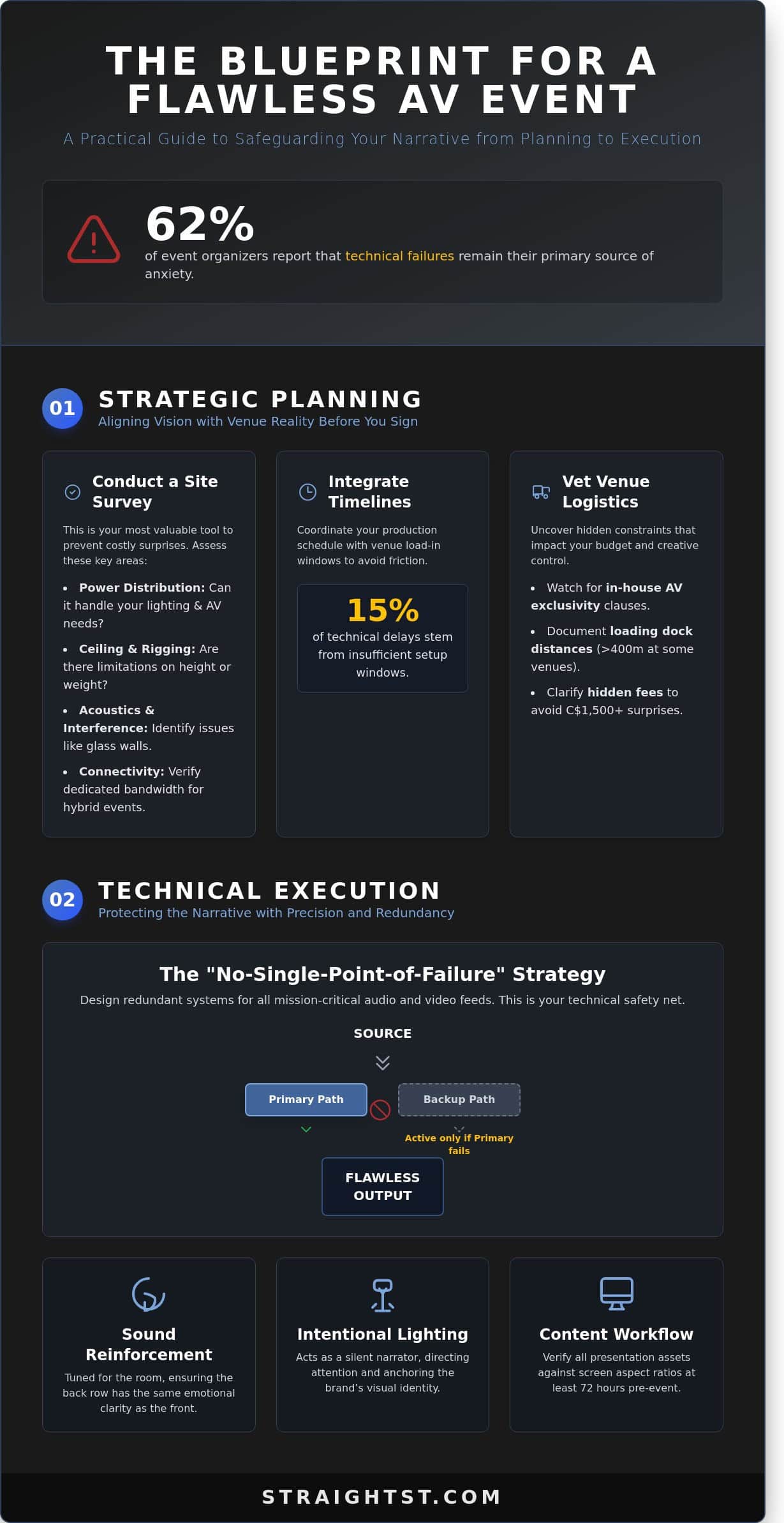
4. Build Redundancy for Mission-Critical Moments
A single point of failure can derail your entire event. Professional production is built on a foundation of redundancy, ensuring that a faulty cable, a failing laptop, or a dead microphone battery never brings the show to a halt.
This means having backup systems for every critical component. Keynote presentations should be loaded onto at least two separate machines. Critical microphones should have a wired backup ready to go. For high-stakes events, even the audio console and video switcher may have a redundant counterpart. This "no-surprises" approach is the hallmark of a reliable production team.
5. Prioritize a Transparent Partner Over a Simple Vendor
The most successful events are born from collaboration, not a transactional vendor relationship. Look for a production partner who acts as an extension of your team, emphasizing clear communication and complete transparency from the very first quote.
A detailed quote should leave no room for ambiguity, accounting for everything from labour and transport to specific cables and rigging. This prevents hidden on-site fees and builds the trust necessary for a smooth execution. A partner invested in your success will ask the right questions early to reduce risk and ensure the final result aligns perfectly with your vision. You can see examples of this collaborative approach by reviewing our work with other corporate and commercial clients.
6. Leverage Local Expertise to Navigate Regional Nuances
Southern Ontario is a diverse region with unique logistical challenges. The process of loading into a venue in downtown Toronto is vastly different from setting up in Kitchener, Hamilton, or London. A production partner with deep local roots understands these nuances.
Familiarity with regional labour regulations, venue-specific quirks, and established relationships with venue managers creates a more efficient and cost-effective process. A Cambridge-based team, for example, offers significant logistical advantages for events throughout Southwestern Ontario, reducing travel costs and ensuring a crew is familiar with the local landscape.
A flawless event is a story well told, where technology becomes invisible and the message takes centre stage. It begins with a clear vision and is realized through a partnership built on trust, expertise, and a shared commitment to execution.
Contact Straight Street Audiovisual today to discuss your next event’s technical needs.