
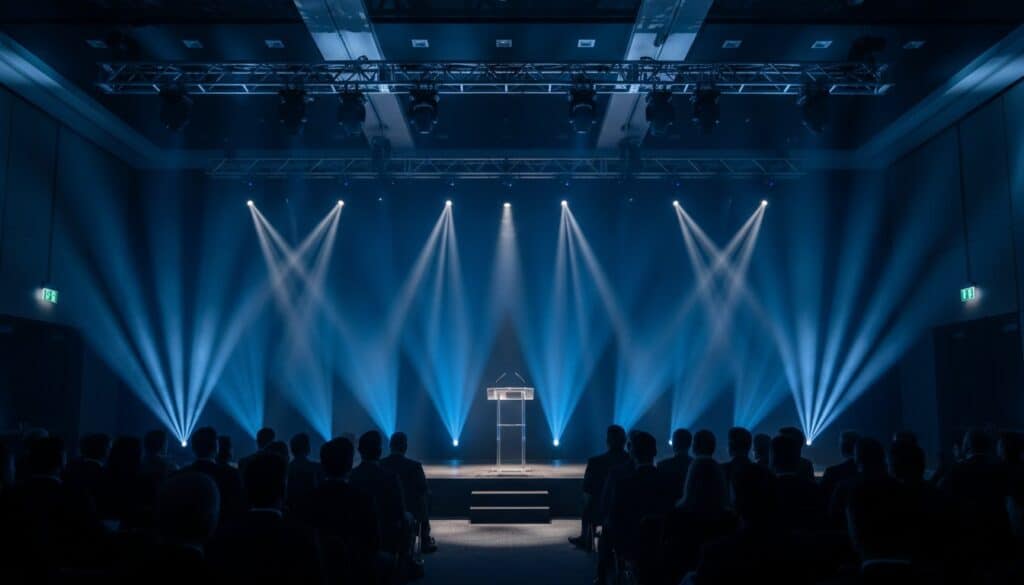
Many corporate events have compelling content and speakers, yet the audience feels disconnected. The problem often isn’t the message but the environment—a generic space with flat, uninspired lighting that fails to create focus or build energy. This is the difference between simply illuminating a room and using light to intentionally guide the audience through a narrative.
Moving beyond basic visibility is key to creating a memorable experience. It requires a thoughtful approach where lighting serves as a silent partner to your message, shaping the atmosphere and directing attention where it matters most.
The Silent Narrator: Why Narrative Lighting Design Matters
Effective lighting design is the intentional use of light, colour, and shadow to guide an audience’s focus and emotional response. In modern event production across Southern Ontario, the standard has shifted from just ensuring visibility to creating a distinct atmosphere. The goal is to build a connection between your message and your audience, making them feel like active participants rather than passive observers.
The psychological impact of lighting is real. The colour temperature, intensity, and movement of light all send subtle cues that influence engagement. Clear communication between event planners and their technical directors is crucial to avoid a visually ‘flat’ experience that undermines your content.
Visibility vs. Narrative Impact
Simply ensuring an audience can see the speaker is the lowest bar for event lighting. While necessary, it does little to build brand resonance or make a keynote memorable. A truly professional setup uses light to create depth and focus.
The careful use of shadows and contrast, for example, can create a more dynamic, focused feel on stage, drawing all eyes to the presenter. This approach moves beyond simple illumination and begins to shape how the audience perceives the information being delivered.
The ROI of Atmosphere
The atmosphere you create directly influences audience retention and emotional response. During a critical presentation or product launch, the right lighting cues can heighten excitement, create moments of quiet reflection, or reinforce a call to action. It’s a powerful tool for holding attention.
Ultimately, narrative lighting is the bridge between technical execution and human connection. It ensures the technology serves the core purpose of the event: to make an impact.
Choosing Your Palette: Practical Lighting Solutions for Every Phase
An event unfolds in distinct phases, and the lighting should adapt to support the goals of each one. From the moment guests arrive to the final networking session, a dynamic lighting plan signals shifts in energy and focus. This transforms a generic Toronto hotel ballroom or Kitchener conference centre into a custom-branded environment.
Comparing different lighting tools helps clarify their purpose. Broad wash lighting is great for generating energy across a room, while pin spotting provides tight, focused attention on a specific product, award, or centrepiece. Using textures and custom gobos (stencils for light) can project logos or patterns, reinforcing brand identity on otherwise blank surfaces.
The Walk-In: Setting the First Impression
The arrival experience sets the tone for the entire event. In venues from Hamilton to London, using cooler colour tones and subtle, slow-moving light patterns can build a sense of anticipation and sophistication. Projecting a branded gobo or washing a feature wall in company colours immediately establishes a professional and cohesive environment as guests find their seats.
The Keynote: Directing the Focus
During a keynote or main presentation, the lighting must support the speaker without becoming a distraction. This requires a technical plan that looks great both in the room and for video production, eliminating harsh shadows or underexposed areas. By integrating proven live event production techniques, the lighting ensures the ‘hero’ of your message is always clear and the focus remains squarely on them.
Executing the Vision: Lighting Design in Southern Ontario
A successful lighting design depends on a ‘no surprises’ approach to planning and execution. This is where local expertise becomes a major asset. Understanding the unique logistical challenges of venues across the GTA, Waterloo, and the Windsor corridor reduces risk and ensures a smooth setup.
Our role as a technical partner is to synchronize lighting with all other audio and video elements, creating a cohesive experience. We do this by focusing on clear communication and craft, ensuring the technical production reflects the soul of your event.
Navigating Local Venue Challenges
Many historic or non-traditional venues in cities like Stratford or St. Catharines have specific power and rigging limitations. An experienced local team can identify these issues in advance through a technical audit, preventing costly last-minute changes. This is a core part of our process and is backed by our Comfort Warranty, which guarantees your setup is planned correctly.
This commitment to transparency builds trust and ensures our all-in, transparent pricing reflects the true needs of the project, with no hidden fees. For more on how we approach professional event lighting in Kitchener and Waterloo, our local expertise is a key advantage.
Collaborating for Impact
The most productive collaboration happens when you brief your AV team on the feeling and focus you want to achieve, rather than just listing equipment you think you need. Explain the intended journey for your audience: what should they feel when they walk in? Where should their attention be during the main session? What is the key takeaway?
This information allows a technical director to design a system that achieves your goals effectively and within budget. If you’re ready to plan the technical aspects of your next event, contact us to start the conversation.
Frequently Asked Questions
What is the difference between basic stage lighting and narrative lighting design?
Basic stage lighting focuses purely on visibility—making sure the people on stage can be seen. Narrative lighting design is a more intentional practice that uses colour, shadow, intensity, and movement to create a specific mood, guide audience focus, and reinforce the key moments of a presentation or event.
How much does professional lighting design typically add to an event budget?
The cost varies widely based on the scale of the event, the venue, and the complexity of the design. However, a strategic lighting plan doesn’t always require a massive budget. Often, a few well-placed, high-quality fixtures can have a greater impact than dozens of generic lights. We provide transparent, all-in pricing to help you make an informed decision.
Can lighting design be used for virtual or hybrid events in Toronto?
Absolutely. For virtual and hybrid events, lighting is critical for the broadcast component. Professional lighting ensures presenters look clear and professional on camera, separates them from their background, and creates a high-quality visual experience for the remote audience that matches the quality of the in-person event.
What are gobos, and how do they help with event branding?
A gobo is a small stencil, typically made of metal or glass, that is placed inside a lighting fixture to project a specific pattern or image. They are commonly used to project company logos, event themes, or abstract textures onto walls, floors, or stage backdrops, offering a sophisticated and effective way to brand a space.