
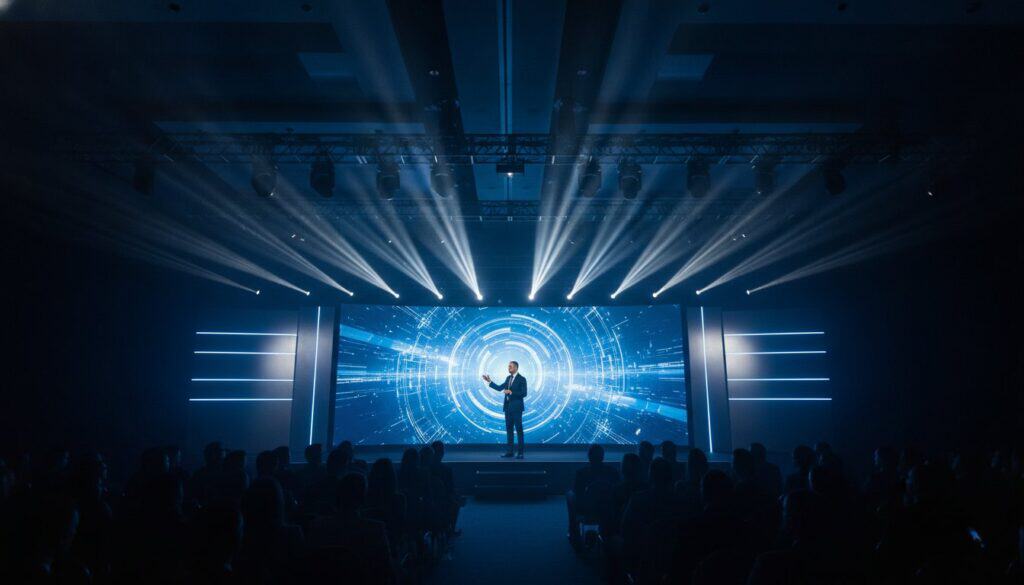
A corporate stage is more than just a raised platform; it is the physical focal point for your event’s most important communication. When the design is an afterthought, using generic pipe-and-drape or poor lighting, it can unintentionally undermine your message and brand authority. A thoughtfully designed stage provides a professional environment that supports your speakers and reinforces your message for audiences in the room and online.
Effective corporate event stage design in Ontario is about creating a clear, professional, and functional backdrop for your presentation. It’s about ensuring every element on stage, from the lectern to the lighting, serves a distinct purpose.
The Purpose of Professional Corporate Stage Design
The stage is the visual anchor for your entire event. Its design directly influences how your audience perceives your speakers and your organization. It’s not about extravagance, but about intentionality and creating an environment that aligns with your professional standards.
The physical dimensions of a stage—its height, depth, and width—communicate a great deal. A stage that is too high can feel intimidating, while one that is too low can get lost in a large ballroom. The right balance ensures your presenters have a commanding yet approachable presence.
Today’s events often require a blend of physical and digital elements. An effective design integrates scenic components, such as custom backdrops and branded lecterns, with digital solutions like LED video walls or projection screens. This ensures a clean, modern look that works for both your in-person audience and those joining via livestream.
Defining Your Event’s Visual Foundation
Translating your corporate brand from a 2D style guide into a three-dimensional space requires careful consideration. It’s about using colour, texture, and shape to create a cohesive look without overwhelming the audience or the presenter.
Core Technical Elements: Lighting and Scenery
While the physical structure of the stage is the foundation, lighting and scenic elements are what bring it to life. These technical components are critical for directing audience attention, ensuring clarity on camera, and creating a polished environment.
Professional live event production uses lighting as a tool to guide the audience’s focus. Proper lighting ensures the speaker is always the centre of attention, minimizes distractions, and creates a clean visual field. For hybrid events in Toronto and across the GTA, using texture and backlighting is essential for creating depth on camera, preventing the broadcast from looking flat and unengaging.
Strategic Lighting for Clarity and Focus
Choosing stage lighting should be based on the event’s goals, not just a list of available equipment. A panel discussion has different lighting needs than a solo keynote or a product launch. The key is to create a lighting plan that supports the content of the presentation.
For any event with a video component, colour temperature is a critical detail. The right lighting ensures natural-looking skin tones on camera, which is vital for keeping a virtual audience engaged. You can see examples of how different lighting techniques are applied in our portfolio of past work.
Navigating Southern Ontario Venue Logistics
Every venue comes with its own set of opportunities and constraints. Ballrooms in Kitchener-Waterloo, Hamilton, and London often have specific challenges, such as low ceiling heights, limited power availability, or difficult loading dock access.
An early site visit with a technical partner is the best way to prevent expensive, last-minute problems. Understanding the venue’s unique layout and technical infrastructure allows for a realistic production plan that works within the space, not against it. This proactive step is a core part of our process for all events we manage across Southern Ontario.
Planning and Execution: A No-Surprises Approach
The success of your stage design is determined long before the first piece of equipment arrives at the venue. A thorough pre-production process is the key to reducing risk, controlling costs, and ensuring the final result aligns with your vision.
Our “no-surprises” philosophy is built on clear communication and detailed planning. We provide all-in, transparent pricing so you have a firm understanding of the total cost from the outset. This process prevents scope creep and unexpected charges, giving you full control over your budget.
It is also important to understand the distinct roles of a technical director and an event planner. While an event planner manages the overall event logistics, a technical director focuses exclusively on the execution of all audiovisual elements, ensuring every lighting cue, sound check, and video playback happens correctly.
The Pre-Production Workflow
We use 3D renderings and visualizations to allow you to see your stage design within the context of your chosen venue before committing. This step helps align expectations and allows for adjustments when they are easy and cost-effective to make.
Managing load-in schedules, especially in busy downtown corridors or convention centres, requires local knowledge and coordination. Technical rehearsals are the final, essential step to confirm that all lighting, audio, and video cues are programmed and working correctly, safeguarding your brand’s reputation on show day.
Finding a Production Partner in Southern Ontario
Working with a local audiovisual partner provides significant logistical advantages. Based in Cambridge, our team has decades of experience navigating the 401 corridor, from Windsor to Toronto and beyond. We understand the venues, the traffic patterns, and the local labour conditions.
As an independent Canadian company, we are committed to transparency and reliability. Our work is backed by a Comfort Warranty, which guarantees our equipment and services will perform as promised. This commitment to accountability is how we build long-term relationships with our clients.
A well-executed stage is fundamental to a successful corporate event. By focusing on practical design, professional technical execution, and detailed pre-production planning, you create an environment that allows your message to be delivered with confidence and clarity. To discuss your next event in Ontario, connect with our production team.
Frequently Asked Questions
What are the most important elements of corporate stage design?
The most important elements are clarity, branding, and functionality. This includes appropriate stage size and height for the room, clean sightlines for all attendees, professional lighting that focuses attention on the speaker, and clear, well-integrated branding that looks good both in person and on camera.
How much space do I need for a professional stage setup in an Ontario venue?
The required space depends on the number of presenters, the size of the screen(s), and any additional scenic elements. A simple keynote may only need a 16’x8′ stage, while a panel discussion could require 24’x12′ or more. A site visit is the best way to determine the optimal size for your specific venue and event format.
Can I customize a rental stage to match my corporate branding?
Absolutely. Modular rental staging can be customized with branded lecterns, custom-printed backdrops, coloured scenic panels, and gobos (lighting stencils) that project your logo. These elements transform a standard stage into a branded environment.
What is the difference between a technical director and an event planner?
An event planner manages the overall event, including budget, venue, catering, and registration. A technical director is a specialist who oversees all audiovisual production elements—such as lighting, sound, video, and staging—to ensure a flawless technical execution of the show itself. Straight Street provides technical direction, not event planning.